

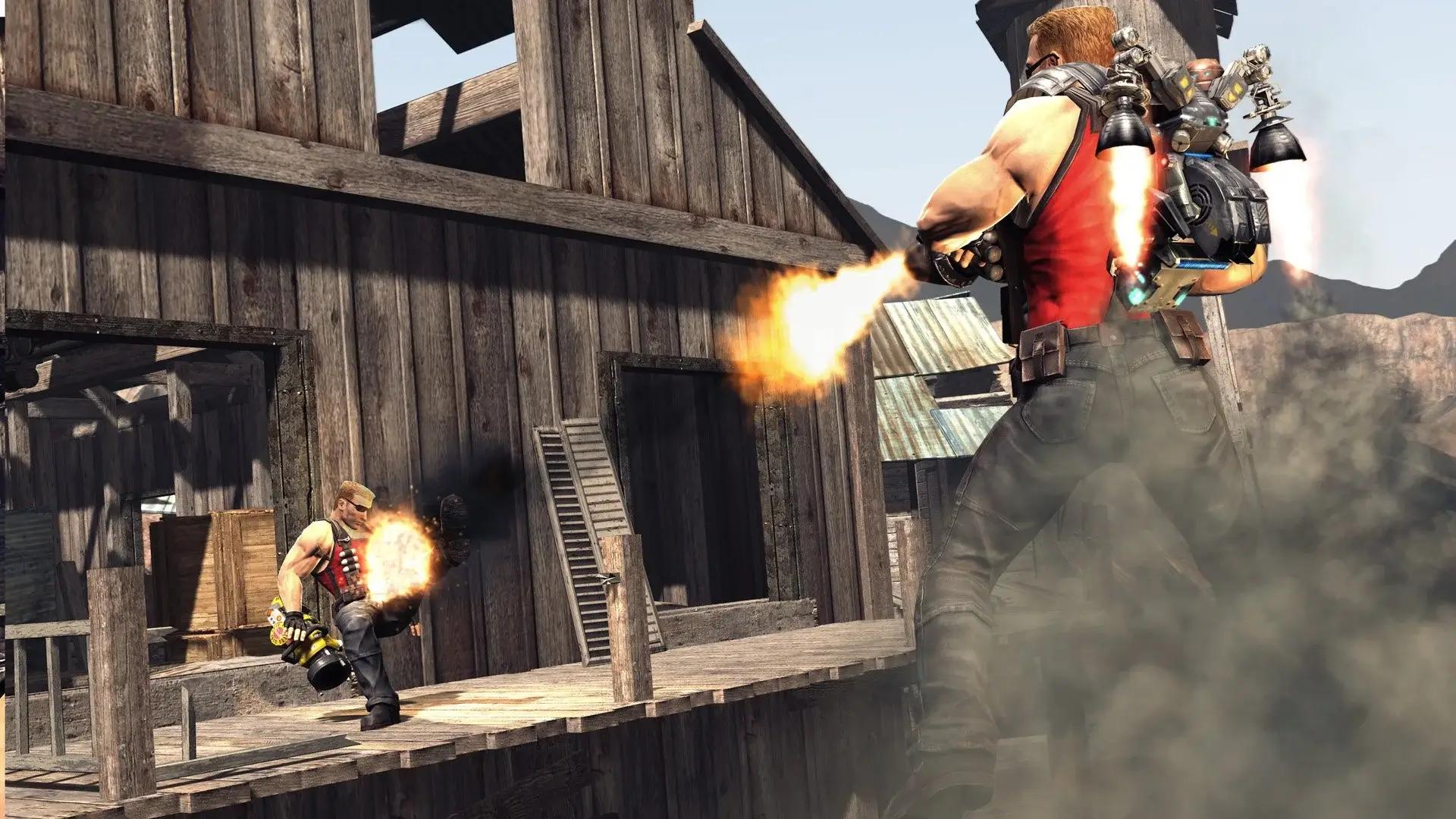
Take-Two vs. George Broussard, One of gaming’s most controversial developer-publisher relationships and the wreckage it left behind.
The George Broussard and Take-Two Controversy That Rocked the Gaming World
Some stories in gaming history don’t just fade away. They linger. They haunt. And the saga of George Broussard and Take-Two Interactive is exactly that kind of story — messy, complicated and impossible to ignore if you care about how great games get made, or more accurately, how they don’t.
George Broussard co-founded 3D Realms back in 1987. He helped build Duke Nukem into one of the most recognizable characters in gaming history. Brash, loud, absurdly over-the-top — Duke was a cultural phenomenon in the 1990s. And Broussard was the man steering the ship. For a while, everything looked golden.
Then came Duke Nukem Forever. And with it, one of the most catastrophic development cycles the industry has ever seen. The relationship between Broussard and Take-Two didn’t just sour — it collapsed spectacularly and very publicly. Understanding how that happened tells you a lot about the broken machinery behind big-budget game development.
Who Is George Broussard? The Man Behind Duke Nukem
Before diving into the controversy, you need to understand who Broussard actually is. He isn’t some faceless corporate suit. He’s a genuine gaming pioneer — someone who got into the industry when it was still figuring itself out and helped shape what first-person shooters became.
Key facts about George Broussard:
- Co-founded Apogee Software in 1987 alongside Scott Miller
- Apogee later rebranded as 3D Realms
- Produced and directed Duke Nukem 3D (1996) — a landmark first-person shooter
- Duke Nukem 3D sold over 3.5 million copies worldwide
- Announced Duke Nukem Forever in April 1997
- Spent the next 14 years attempting to finish it
- 3D Realms shut down in May 2009 with Duke Nukem Forever still unfinished
That last point is where everything unravels. Fourteen years. One game. No finish line. And Take-Two Interactive sitting in the background — increasingly frustrated and increasingly vocal about it.
Take-Two Interactive — The Publisher With a Lot to Say
Take-Two Interactive isn’t a small player. This is the company behind Grand Theft Auto, Red Dead Redemption, BioShock and some of the most successful franchises in gaming history. They know how to publish games and know how to make money. They certainly understand how to exert influence.
Take-Two had a publishing agreement with 3D Realms for Duke Nukem Forever. They were funding the project — or at least had financial stakes in its eventual release. As years turned into a decade and the game remained vaporware, Take-Two’s patience wore dangerously thin.
A timeline of the Duke Nukem Forever development disaster:
| Year | Event |
| 1997 | Duke Nukem Forever announced |
| 1998 | First screenshots released — hype explodes |
| 2001 | Engine switched from Quake II to Unreal Engine |
| 2003 | Engine switched again — development restarted |
| 2004 | Game declared “mostly done” by Broussard |
| 2007 | Teaser trailer released — fans go wild |
| 2009 | 3D Realms shuts down — game still unfinished |
| 2010 | Take-Two files lawsuit against 3D Realms |
| 2011 | Gearbox Software completes and releases the game |
| 2011 | Duke Nukem Forever finally ships — to devastating reviews |
Every row in that table represents years of wasted potential. Every engine switch meant throwing away work already done and delay meant more money burned and more goodwill evaporated.
The Take-Two Lawsuit — When Things Got Ugly
Here’s where the George Broussard and Take-Two conflict stopped being an industry rumor and became a legal reality. After 3D Realms shut down in 2009 Take-Two filed a lawsuit against the studio. The publisher claimed that 3D Realms had failed to deliver Duke Nukem Forever despite receiving advance payments.
Take-Two’s position was blunt. They had paid. They hadn’t received a finished game. And they wanted either the game or their money back.
Take-Two has provided a substantial amount of money to 3D Realms to work on Duke Nukem Forever, yet 3D Realms has not finished the game. — Take-Two Interactive legal documentation, 2009
The lawsuit sent shockwaves through the gaming industry. It was one of the first high-profile cases where a major publisher took direct legal action against a developer over a delayed title. And it put Broussard — as the driving creative force at 3D Realms — squarely in the crosshairs of public scrutiny.
What the lawsuit revealed:
- Take-Two had maintained a financial relationship with 3D Realms throughout development
- Advance payments had been made with the expectation of delivery
- No clear completion timeline had been enforced
- The breakdown of the developer-publisher relationship was total and irreversible
George Broussard’s Side of the Story
It’s easy to paint Broussard as simply the guy who couldn’t finish a game. But that’s a reductive take and not entirely fair. Development hell is rarely one person’s fault and Duke Nukem Forever’s catastrophic timeline involved systemic problems that went far beyond any single decision.
Broussard was a notorious perfectionist. He reportedly restarted development multiple times because he felt the game wasn’t meeting the standard he’d set in his head. Every time a new technology emerged — a better engine, improved graphics capabilities, new physics systems — he wanted Duke Nukem Forever to incorporate it. The result was a game that kept chasing a moving target it could never quite catch.
The core problems driving Duke Nukem Forever’s endless development:
- Perfectionism without pragmatism — Broussard’s vision kept expanding beyond what was achievable
- Engine changes — Switching engines mid-development means starting significant portions from scratch
- Scope creep — The game kept growing bigger and more ambitious with no corresponding increase in team size
- No firm publisher deadlines — Without hard contractual enforcement, delays compounded
- Small team, massive ambitions — 3D Realms never scaled up to match the project’s scope
- Industry shift — The gaming landscape changed dramatically between 1997 and 2009 making the original vision feel dated
Broussard himself has spoken publicly about the experience in the years since. He’s acknowledged mistakes. He’s also pointed to the immense pressure and the impossible standard Duke Nukem 3D set as factors that paralyzed decision-making throughout development.
What Take-Two Got Right — And Where They Overstepped
Take-Two’s frustration was legitimate. Nobody disputes that. When you fund a project for over a decade and receive nothing deliverable, legal action isn’t unreasonable. It’s business.
But Take-Two’s public posture around the situation wasn’t always measured. The publisher’s communications about the Duke Nukem Forever situation — both through legal filings and through industry channels — created a narrative that placed almost all blame on 3D Realms and Broussard personally. That narrative, while convenient for a publisher protecting its reputation, glossed over some inconvenient questions.
Questions Take-Two never fully answered:
- Why did it take until 2009 to take legal action if the project had been mismanaged for years?
- What contractual milestones were in place and were they being monitored?
- Did Take-Two’s own business pressures influence the timing of the lawsuit?
- Why was the publishing agreement structured in a way that allowed over a decade of delays?
A publisher relationship isn’t a passive arrangement. Take-Two had leverage throughout this process and chose not to exercise it until the situation became untenable. That’s a business decision — and a consequential one.
The Gearbox Chapter — Duke Nukem Forever Finally Ships
After 3D Realms collapsed and the lawsuit settled Gearbox Software — the studio behind Borderlands — stepped in and acquired the rights to complete Duke Nukem Forever. Randy Pitchford and his team stitched together the remains of over a decade of fractured development and released the game in June 2011.
The reception was brutal.
Duke Nukem Forever review scores at launch:
| Platform | Metacritic Score | Critical Consensus |
| PC | 54/100 | Outdated, unfunny, disappointing |
| PlayStation 3 | 49/100 | Below average, missed the mark |
| Xbox 360 | 51/100 | Mediocre, dated design |
After 14 years of anticipation the game landed with a thud heard across the entire industry. Critics weren’t just disappointed — they were actively bewildered that this was the finished product. The humor felt like a relic of the 1990s. The gameplay mechanics lagged far behind contemporary shooters. The whole thing felt like opening a time capsule from a culture that had moved on.
And yet — and this is crucial — the game sold over 1.5 million copies in its first month. People bought it out of morbid curiosity if nothing else. Duke Nukem still had name recognition powerful enough to move units even in defeat.
The Lasting Impact of the Broussard and Take-Two Fallout
The Duke Nukem Forever saga didn’t just end careers and waste money. It changed how the gaming industry thinks about developer-publisher relationships and the dangers of unchecked creative control.
Lessons the industry took from this disaster:
- Milestone-based contracts became standard practice — publishers now enforce delivery checkpoints
- Engine switching penalties became a conversation point in development agreements
- Creative director autonomy got scrutinized more carefully against practical timelines
- Vaporware accountability became a real concern — studios can’t announce games a decade before delivery anymore without consequences
- Development transparency increased — publishers now demand more visibility into day-to-day progress
The Broussard and Take-Two controversy essentially stress-tested the entire developer-publisher model and exposed every weakness in it. In a dark way it did the industry a genuine service.
George Broussard Today — Life After Duke Nukem Forever
After 3D Realms shuttered Broussard stepped away from the spotlight. He’s been active on social media — particularly Twitter — where he comments on gaming news and industry trends with the candor of someone who has nothing left to prove and nothing left to lose.
He’s never been shy about his opinions. He criticizes games he thinks are overhyped. He praises work he finds genuinely impressive. And occasionally he revisits the Duke Nukem Forever era with a mixture of reflection and what seems like hard-won perspective.
What he hasn’t done is release another game. Whether that’s by choice or circumstance depends on who you ask. But his silence as a developer speaks volumes in an industry that moves at the speed of a GPU upgrade cycle.
Case Study: Development Hell — Duke Nukem Forever vs. Other Infamous Delays
Duke Nukem Forever isn’t alone in the development hell hall of fame. But it’s arguably the most extreme case. Here’s how it compares to other notoriously delayed titles:
| Game | Developer | Years in Development | Final Reception |
| Duke Nukem Forever | 3D Realms / Gearbox | 14 years | Metacritic: 49–54 |
| Diablo III | Blizzard | 11 years | Metacritic: 88 |
| Star Citizen | Cloud Imperium | 12+ years (ongoing) | Unreleased |
| Half-Life 3 | Valve | Never released | N/A |
| Final Fantasy XV | Square Enix | 10 years | Metacritic: 81 |
The difference between Duke Nukem Forever and something like Final Fantasy XV or Diablo III is stark. Long development doesn’t automatically mean bad results. But without structure, clear milestones and a publisher willing to enforce accountability — long development becomes a death march.
Frequently Asked Questions About George Broussard and Take-Two
Did Take-Two win the lawsuit against 3D Realms?
The lawsuit was settled out of court in 2010. The specific conditions were never entirely disclosed, but the agreement allowed Gearbox to obtain and finalize the game.
Did George Broussard profit from Duke Nukem Forever’s release?
Broussard and 3D Realms kept a portion of their royalty privileges as a result of the legal agreement.However the financial returns were a fraction of what a successful launch might have generated.
Is George Broussard working on anything new?
As of the most recent public information Broussard hasn’t announced any new development projects. He remains active on social media but hasn’t returned to active game development.
Was Duke Nukem Forever really that bad?
It wasn’t unplayable. But after 14 years of hype the gap between expectation and reality was simply too vast to survive. A 50/100 game released in 1999 might have been fine. A 50/100 game in 2011 after 14 years of promises felt like a betrayal.
What happened to 3D Realms after the shutdown?
3D Realms technically still exists as a brand. It was acquired and relaunched as a publisher focusing on retro-style games. The original studio that built Duke Nukem is gone but the name lives on in a different form.
Final Thoughts — What the George Broussard and Take-Two Story Really Teaches Us
Strip away the lawsuits, the memes and the years of internet mockery and you find something genuinely instructive at the heart of this story. Creative ambition without structure is just expensive dreaming. And publisher relationships without real accountability are ticking clocks.
George Broussard wanted to make a great game. Take-Two wanted to sell a great game. Somewhere between those two goals the whole thing fell apart — and neither side handled it perfectly. The world of gaming received a warning story instead of a timeless hit. .
Duke Nukem deserved better. So did everyone who waited 14 years for something that never quite arrived.
The key takeaways from the George Broussard and Take-Two controversy:
- Perfectionism without pragmatism destroys projects
- Publisher oversight isn’t optional — it’s essential
- Engine changes mid-development are almost always catastrophic
- The timing of announcements is important — do not commit to things you are unable to fulfill.
- Developer-publisher relationships need structure from day one
- Even legendary IP can’t survive unlimited development chaos
The story isn’t really about one developer or one publisher. It’s about what happens when the systems around a creative project fail — and everyone pays the priceTake-Two vs. George Broussard.Take-Two vs. George BroussardTake-Two vs. George Broussard.Take-Two vs. George Broussard.Take-Two vs. George Broussard.Take-Two vs. George Broussard.Take-Two vs. George Broussard.