
Batteries often fail at the most inconvenient times. Middle of a camping trip. During a blackout. Deep on a hiking trail at dusk. That’s exactly why a solar powered flashlight isn’t just a cool gadget — it’s one of the smartest investments you can make for your home, your backpack and your emergency kit.
Today’s best solar powered flashlights are bright, durable, fast-charging and genuinely reliable. Whether you’re prepping for emergencies, hitting the trails or just tired of buying batteries, there’s a solar flashlight built perfectly for your needs.
This guide covers everything — how they work, what to look for and the best models available right now. Let’s get into it.
What Is a Solar Powered Flashlight and How Does It Work?
The Science Behind Solar Powered Flashlights
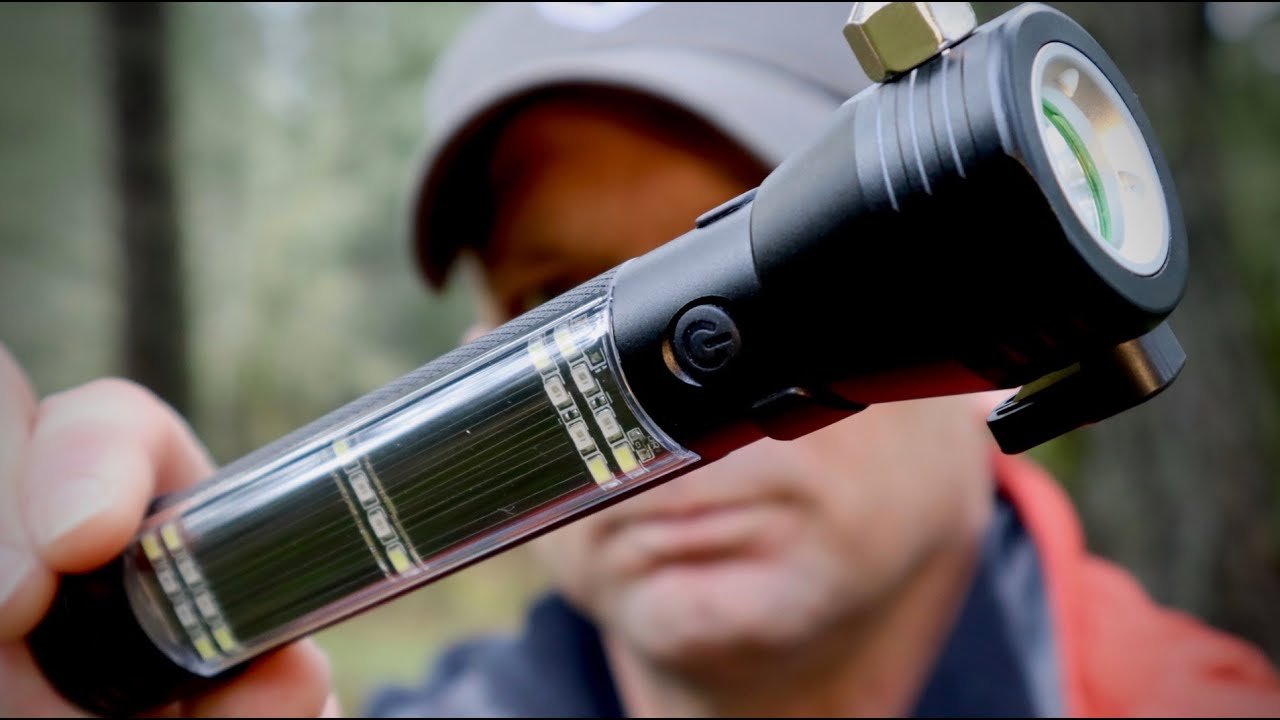
A solar powered flashlight works through a beautifully simple process. The photovoltaic (PV) panel on the flashlight absorbs sunlight and converts it directly into electrical energy. That energy flows into a rechargeable battery — typically lithium-ion or nickel-metal hydride (NiMH) — where it’s stored until you need it.
Key components inside every solar charged flashlight:
- Photovoltaic solar panel — captures and converts sunlight
- Charge controller — prevents overcharging and battery damage
- Rechargeable battery — stores converted solar energy
- LED bulb — converts stored energy into light efficiently
Lithium-ion batteries are the gold standard for solar flashlights. They hold more energy per gram, charge faster and survive more charge cycles than NiMH alternatives. For emergency preparedness and frequent use, lithium-ion wins every time.
Solar Powered Flashlight vs Regular Flashlight
| Feature | Solar Powered Flashlight | Regular Battery Flashlight |
| Running cost | Nearly zero | Ongoing battery purchases |
| Emergency reliability | High — charges from sunlight | Dependent on battery supply |
| Environmental impact | Low | High (battery waste) |
| Initial cost | Moderate | Low |
| Long-term value | Excellent | Poor |
| Best for | Outdoors, emergencies, travel | Occasional indoor use |
The math is simple. Over five years of regular use you might spend $80–$150 on batteries alone. A quality solar rechargeable flashlight costs $25–$60 upfront and runs on free sunlight forever. The ROI is obvious.
Types of Solar Powered Flashlights
- Handheld solar flashlights — classic form factor for general use
- Solar powered headlamps — hands-free lighting for hiking and working
- Solar lanterns with flashlight mode — dual-function for campsites and emergencies
- Solar powered tactical flashlights — high-lumen rugged builds for professional use
- Multi-function solar flashlights — include USB power bank output and SOS mode
Why You Need a Solar Powered Flashlight in 2026
Perfect for Power Outages and Emergency Preparedness
Electrical interruptions occur more frequently than many individuals understand. According to the U.S. Energy Information Administration, the average American experiences over eight hours of power interruptions per year. In storm-prone states like Florida, Texas and Louisiana that number climbs dramatically higher.
When the grid goes down, battery-powered flashlights are only as reliable as the batteries you remembered to stock. Solar energy flashlights eliminate that dependency entirely. FEMA’s official emergency preparedness guidelines recommend keeping at least one reliable light source in every home emergency kit — and a solar powered flashlight is the smartest possible choice for that slot.
During Hurricane Ian in 2022, millions of Florida residents lost power for days. Those with solar charged flashlights simply left them on windowsills during daylight hours and had working lights every night. Those relying on batteries scrambled for supplies at sold-out stores.
Best for Camping and Outdoor Adventures
Campers and backpackers have embraced solar powered flashlights faster than almost any other consumer group. Carrying spare batteries adds weight and takes up precious pack space. A solar flashlight for camping solves all of that — clip it to your backpack during the day’s hike and it charges while you walk.
Beyond camping, solar rechargeable flashlights excel for:
- Hiking and trail running — lightweight headlamp versions charge during daytime activities
- Fishing — waterproof solar flashlights handle wet conditions effortlessly
- Hunting — models with red light mode preserve valuable night vision
- Backpacking — ultralight solar options weigh less than a standard flashlight plus batteries
Cost Savings Over Time
| Cost Factor | Battery Flashlight (5 years) | Solar Powered Flashlight (5 years) |
| Initial purchase | $15–$30 | $25–$60 |
| Battery replacements | $80–$150 | $0 |
| Total cost | $95–$180 | $25–$60 |
| Savings | — | $70–$120 |
The solar flashlight pays for itself within the first year for most regular users. After that it’s pure savings every single time you reach for it.
What to Look for When Buying a Solar Powered Flashlight
Solar Panel Quality
Two main panel types exist. Monocrystalline panels convert sunlight at 17–22% efficiency and perform better in low-light conditions. Polycrystalline panels convert at 13–16% efficiency — cheaper but noticeably slower on cloudy days. For a solar flashlight you’ll actually rely on, monocrystalline panels are worth the modest price premium.
Battery Capacity and Runtime
| Battery Capacity | Estimated Runtime (Medium Brightness) | Best For |
| 500–1000 mAh | 3–6 hours | Casual occasional use |
| 1000–2000 mAh | 6–12 hours | Camping and everyday use |
| 2000–4000 mAh | 12–24 hours | Emergency preparedness |
| 4000+ mAh | 24+ hours | Extended expeditions |
For emergency kits aim for at least 2000 mAh. For backpacking where weight matters, 1000–1500 mAh hits the sweet spot.
Lumens and Brightness
- 20–100 lumens — reading, close-range tasks, campsite navigation
- 100–300 lumens — trail hiking, general outdoor use, power outage navigation
- 300–600 lumens — search and rescue, security work
- 600–1000+ lumens — tactical use, long-distance beam
For most people a solar powered flashlight with 200–400 lumens across three brightness modes covers every realistic use case comfortably.
Durability and Weather Resistance
| IP Rating | Water Protection | Best For |
| IP65 | Water jets resistant | Camping, rain |
| IP67 | Submersion up to 1m/30min | Fishing, heavy rain |
| IP68 | Submersion beyond 1m | Extreme conditions |
For camping and emergencies IP65 is the minimum worth considering. Serious outdoor users should look for IP67 or higher.
Hybrid Charging — Why It Matters
Solar-only charging sounds pure but it’s limiting. Cloud cover and urgent need don’t always align with ideal solar conditions. The best solar powered flashlights offer:
- Direct solar panel charging — primary method, completely free
- USB-C input charging — fast backup when sunlight isn’t available
- Hand crank charging — emergency backup requiring zero power source
Triple charging options sound like overkill until you actually need them.
Best Solar Powered Flashlights in 2026 — Top Picks
Best Overall: LuminAID PackLite Spectra (~$35)
The LuminAID PackLite Spectra earns the top overall spot by doing everything well. Solid solar panel, generous battery and thoughtful design in one genuinely reliable package.
- Lumens: 150 high / 50 low
- Battery: 2000 mAh lithium-ion
- Charging: Solar + USB-C
- IP Rating: IP67
- Duration: Maximum of 50 hours when utilizing the low setting.
Pros: Excellent build quality, fully waterproof, USB-C backup charging Cons: Not the brightest option, solar panel could be larger
Best for Camping: Goal Zero Torch 500 (~$59)
Goal Zero makes the best solar powered outdoor gear in the business and the Torch 500 is their flashlight masterpiece. At 500 lumens it’s genuinely bright and the 4000 mAh battery handles extended camping trips without drama.
- Lumens: 500 high / 250 medium / 50 low
- Battery: 4000 mAh lithium-ion
- Charging: Solar + USB-C + hand crank
- IP Rating: IP65
- Bonus: Doubles as a USB power bank for phone charging
“The Goal Zero Torch 500 is the only flashlight I’ve taken on every camping trip for two years. It’s never let me down once,” says outdoor guide Sarah Chen at The Trek.
Pros: Triple charging, 500 lumens, massive battery, power bank function Cons: Bulkier than competitors, premium price
Best for Emergencies: Eton Blackout Buddy (~$29)
The Eton Blackout Buddy plugs into any wall outlet to stay permanently charged — so it’s always ready when disaster strikes. The solar panel kicks in as backup during extended outages.
- Lumens: 200
- Battery: 2500 mAh
- Charging: Solar + wall outlet + USB-C
- Runtime: Up to 72 hours on low mode
Pros: Always charged at home, 72-hour runtime, affordable price Cons: Not designed for heavy outdoor use
Best Budget Pick: LE Solar Flashlight (~$18)
Under $20 and genuinely good. It won’t win awards for charging speed but it does exactly what a budget solar powered LED flashlight should. It won’t win awards for charging speed but it does exactly what a budget
- Lumens: 300 high / 100 low
- Battery: 1200 mAh
- Charging: Solar + USB-C
- IP Rating: IP44
Pros: Excellent value, decent 300-lumen output, USB-C backup Cons: IP44 limits heavy rain use, slower solar charging
Best Tactical: Streamlight ProTac HL-X Solar (~$89)
When professionals need a solar powered tactical flashlight they trust Streamlight. The ProTac HL-X delivers a blistering 1000 lumens with military-grade durability.
- Lumens: 1000 high / 300 medium / strobe
- Battery: 3200 mAh
- IP Rating: IP68
- Drop resistance: 2 meters
Pros: 1000 lumens, IP68 waterproofing, military-grade aluminum housing Cons: Premium price, heavier than civilian alternatives
Best Solar Headlamp: BioLite HeadLamp 800 Pro (~$79)
Hands-free lighting transforms outdoor activities. The BioLite 800 Pro delivers 800 lumens in a lightweight headband with a built-in solar strip that charges during daytime adventures.
- Lumens: 800 high / 200 medium / 50 low
- Battery: 2200 mAh
- Weight: 85g
- IP Rating: IP67
Pros: 800 lumens is exceptional for a headlamp, charges while you hike Cons: Solar strip charges slowly — USB-C backup is essential
Full Comparison Table — 2026 Best Solar Flashlights
| Model | Lumens | Battery | IP Rating | Price | Best For |
| LuminAID PackLite Spectra | 150 | 2000 mAh | IP67 | ~$35 | Overall best |
| Goal Zero Torch 500 | 500 | 4000 mAh | IP65 | ~$59 | Camping |
| Eton Blackout Buddy | 200 | 2500 mAh | N/A | ~$29 | Emergencies |
| LE Solar Flashlight | 300 | 1200 mAh | IP44 | ~$18 | Budget |
| Streamlight ProTac HL-X | 1000 | 3200 mAh | IP68 | ~$89 | Tactical |
| BioLite HeadLamp 800 Pro | 800 | 2200 mAh | IP67 | ~$79 | Headlamp |
How to Charge and Maintain Your Solar Powered Flashlight
Best Charging Practices
Getting the most from your solar flashlight starts with smart charging habits:
- Face the panel directly at the sun — perpendicular angles boost absorption by up to 40%
- Always charge outdoors — window glass filters UV rays and cuts efficiency by 50%+
- Avoid partial shading — even small shadows dramatically reduce panel output
- Clean the panel regularly — dust and grime quietly kill charging efficiency
- Charge between 10am and 2pm — solar intensity peaks during these hours
Realistic Charging Times
| Sunlight Condition | Time to Full Charge (2000 mAh) |
| Full direct sun | 6–8 hours |
| Partial cloud cover | 10–12 hours |
| Overcast sky | 18–24+ hours |
| Through window glass | 14–18 hours |
This is exactly why hybrid USB-C charging matters so much. On a cloudy day the USB-C port turns an 18-hour solar charge into a 2-hour cable charge.
Battery Maintenance Tips
Treat your battery well and it’ll last 3–5 years easily:
- Never store at 0% charge — lithium-ion batteries degrade fastest when fully depleted
- Store at 40–60% charge for long-term storage
- Avoid extreme heat — temperatures above 45°C permanently damage lithium cells
- Use the flashlight regularly — batteries stored unused for months lose capacity faster
Frequently Asked Questions About Solar Powered Flashlights
Can a solar powered flashlight charge indoors?
Technically yes but practically no. Indoor artificial light delivers only 5–10% of the energy needed for meaningful charging. Always charge outdoors in direct sunlight for best results. Use the USB-C port indoors.
How long does a solar flashlight stay charged?
A quality lithium-ion solar flashlight holds its charge for 3–6 months in storage. Cheaper NiMH models lose charge within 4–8 weeks. Maintain a charge level between 40% and 60% and review it on a monthly basis.
Are solar powered flashlights worth it?
Absolutely — especially for anyone who camps, prepares for emergencies or simply hates buying batteries. The long-term cost savings alone justify the purchase and the reliability advantage in emergencies is genuinely significant.
Can solar flashlights work in cloudy weather?
Yes but slowly. Monocrystalline panel models charge at 60–70% efficiency under partial cloud cover. On fully overcast days efficiency drops to 20–40%. Always use the USB-C backup port when weather is unreliable.
What is the brightest solar powered flashlight?
The Streamlight ProTac HL-X Solar leads the consumer market at 1000 lumens. For non-tactical users the Goal Zero Torch 500 delivers 500 lumens more than enough for any outdoor or emergency application.
Final Thoughts
A solar powered flashlight isn’t a luxury item it’s a practical, money-saving tool that genuinely outperforms battery alternatives in almost every real-world situation. For emergencies the Eton Blackout Buddy is unbeatable, camping the Goal Zero Torch 500 is the clear champion. For everyday reliability at a fair price the LuminAID PackLite Spectra hits the sweet spot.