

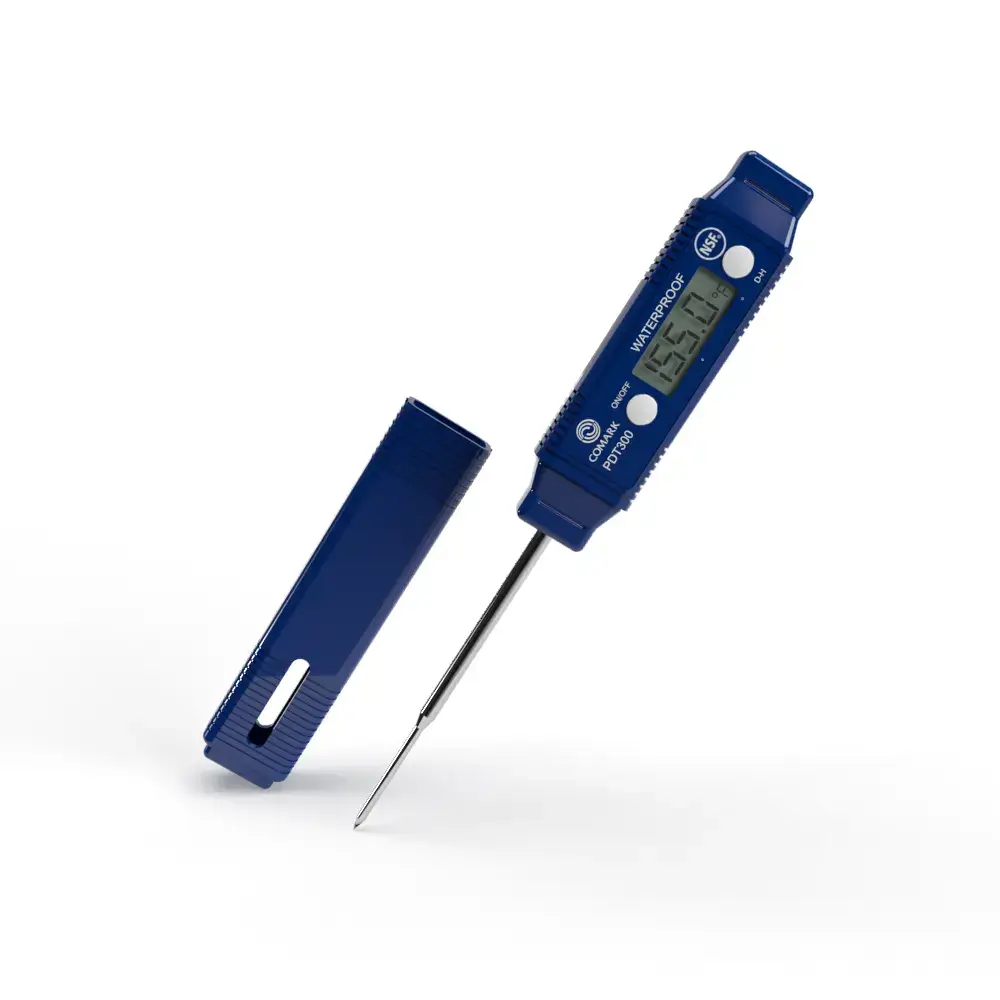
Small tool. Massive impact. Here’s everything you need to know.
Picture this. You’ve spent two hours slow-cooking a gorgeous chicken roast for your family. It looks perfect golden brown, smells incredible. You slice into it and find pink meat in the middle. Dinner is ruined and worse, someone could get sick. Now imagine having a digital pocket thermometer in your kitchen drawer. Ten seconds and a quick probe would’ve caught that problem before it reached the table.
That’s the power of this tiny tool. It’s not glamorous. It won’t win Instagram likes. But it might be the single most useful gadget you own whether you’re cooking, working in a professional kitchen, checking HVAC systems, or monitoring food safety compliance.
This guide covers everything. Types, features, usage tips, calibration, maintenance, and honest answers to the questions most people search for. Let’s get into it.
What Is a Digital Pocket Thermometer?
The Basic Definition and How It Works
A digital pocket thermometer is a compact, handheld temperature-measuring device that displays readings on a digital screen. Unlike old-school dial thermometers, digital versions convert temperature data into an electronic signal and show you a precise number usually within seconds.
Here’s the basic science. The probe tip contains a temperature sensor most commonly a thermocouple or a thermistor. When you insert the probe into food, liquid, or any material, the sensor detects heat and sends an electrical signal to the thermometer’s processor. The processor converts that signal into a temperature reading and displays it on the screen.Thermocouples work by measuring voltage changes at the junction of two different metals. They’re faster and handle a wider temperature range. Thermistors use resistance changes in a ceramic material to measure temperature. They’re slightly slower but often more accurate at moderate temperature ranges which is why most food thermometers use thermistors.
The difference between analog and digital pocket thermometers comes down to three things:
- Speed — digital wins every time, often reading in 2–5 seconds vs. 30+ seconds for dial models
- Accuracy — digital thermometers typically achieve ±1°F accuracy vs. ±2–4°F for analog
- Readability — a clear digital display beats squinting at a tiny needle on a dial
Why “Pocket-Sized” Actually Matters
The word “pocket” isn’t just marketing language. It describes a genuine design philosophy these tools are built for portability and instant access.
Think about who uses a pocket thermometer daily. A line cook in a busy restaurant can’t haul a large thermometer unit around during service. They need something that clips onto their apron, slides into a pocket, and is ready in one second. A food safety inspector visiting dozens of restaurants in a day needs something light, durable, and fast. An HVAC technician checking duct temperatures needs one hand free for tools.
The compact size isn’t a compromise. It’s the whole point. And modern engineering means you don’t sacrifice accuracy or features to get it.
Types of Digital Pocket Thermometers
Not all digital pocket thermometers are built the same. Different designs serve different purposes and knowing which type fits your needs saves you money and frustration.
Instant-Read Digital Pocket Thermometers
Instant-read thermometers are the most popular type and for good reason. They deliver a temperature reading in 2 to 5 seconds, making them ideal for anyone who needs quick, reliable measurements without waiting around.
The best instant-read models use thermocouple sensors precisely because of their speed. When you’re flipping burgers on a hot grill or checking dozens of food items during a restaurant health inspection, every second counts.
Key features to look for in an instant-read digital pocket thermometer:
- Reading speed of 3 seconds or less
- Temperature range of at least -58°F to 572°F (-50°C to 300°C)
- Accuracy of ±1°F or better
- Auto-rotating display so you can read it from any angle
- Foldable probe for safe pocket storage
These are the workhorses of the thermometer world. Home cooks love them. Professional chefs rely on them. Food safety professionals consider them essential equipment.
Waterproof Digital Pocket Thermometers
Water and electronics don’t mix unless the device is specifically designed to handle it. A waterproof digital pocket thermometer carries an IP (Ingress Protection) rating that tells you exactly how much moisture it can handle.
Here’s a simple breakdown of common IP ratings:
| IP Rating | Dust Protection | Water Protection | Best Use Case |
| IP54 | Partial | Splash resistant | Light kitchen use |
| IP65 | Full | Low-pressure water jets | Commercial kitchens |
| IP67 | Full | Submersion up to 1 meter / 30 min | Dishwasher-safe models |
| IP68 | Full | Submersion beyond 1 meter | Industrial/field use |
For most kitchen environments, IP65 or IP67 is the sweet spot. You can rinse the probe under running water, drop it in a wet sink, and not worry about it dying on you. In professional kitchens where hygiene protocols require frequent cleaning, waterproofing isn’t optional it’s essential.
Infrared Digital Pocket Thermometers
Infrared thermometers work completely differently from probe-based models. Instead of inserting a probe, you point the device at a surface and it measures the infrared radiation emitted by that surface. No contact required.
This makes them incredibly useful for:
- Checking surface temperatures of grills, pans, and ovens
- Industrial applications like checking electrical panels and mechanical equipment
- Identifying hot spots in HVAC systems
- Quick surface screening in food production facilities
However, there’s an important limitation. Infrared thermometers measure surface temperature only — not internal temperature. You can’t use one to check if a chicken breast is cooked through. For that, you still need a probe. Many professionals carry both — an infrared model for surface checks and a probe thermometer for internal readings.
Dual-Probe Digital Pocket Thermometers
As the name suggests, dual-probe models let you monitor two temperature points simultaneously. This is genuinely useful in specific scenarios.Imagine smoking a brisket for 12 hours. You want to track the meat’s internal temperature AND the smoker’s ambient temperature at the same time without opening the lid constantly. A dual-probe thermometer handles both readings on one display. That’s not a luxury; it’s a practical tool that improves your results.Professional kitchens use dual-probe models to monitor multiple food items during simultaneous cooking. Catering operations use them to ensure hot-holding equipment stays above 140°F (60°C) the minimum safe temperature for hot food per food safety regulations.
Medical-Grade Digital Pocket Thermometers
Medical thermometers look similar to food thermometers but they’re built to different standards. They measure a narrower temperature range — typically 96°F to 104°F (35.5°C to 40°C) — but within that range, their accuracy is exceptional, often ±0.2°F.
Healthcare professionals use pocket-sized clinical thermometers for quick patient assessments. The key differences from food thermometers include:
- Calibrated specifically for human body temperature ranges
- FDA or CE medical device certification
- Hygienic probe covers for patient safety
- Fever alert features that trigger at defined thresholds
- Memory functions that store recent readings
Don’t use a food thermometer to check your child’s fever. And don’t use a medical thermometer to check your roast. They’re built for different jobs.
Key Features to Look for in a Digital Pocket Thermometer
Shopping for a digital pocket thermometer without knowing what features matter is like buying a car without looking under the hood. Here’s what actually makes the difference.
Temperature Range and Accuracy
Temperature range determines what you can actually measure. A thermometer limited to 200°F is useless for candy making or deep frying. One that maxes out at 400°F won’t help an HVAC technician checking furnace output.
General guidelines by use case:
| Use Case | Recommended Temp Range | Accuracy Needed |
| Everyday cooking | -40°F to 450°F | ±1°F |
| Candy and deep frying | -40°F to 550°F | ±1°F |
| BBQ and smoking | -40°F to 572°F | ±1°F |
| HVAC and industrial | -40°F to 700°F+ | ±2°F |
| Medical / body temp | 96°F to 104°F | ±0.2°F |
| Laboratory use | -58°F to 1000°F+ | ±0.5°F |
Accuracy matters more than most people realize. A thermometer that reads 5°F too low could tell you a chicken breast is safely cooked when it isn’t. That’s not a minor inconvenience that’s a food safety risk.
Response Time — Why Speed Matters
Here’s something most buyers overlook. A 10-second thermometer and a 2-second thermometer feel completely different in practice.
In a busy kitchen, you might check temperatures 50 times during a service. Multiply 8 extra seconds by 50 checks and you’ve lost nearly 7 minutes just waiting for readings. That adds up fast.
More importantly, slow response time affects accuracy. If you’re checking a thin piece of fish and the probe takes 10 seconds, the residual heat from the cooking surface can throw off your reading. Faster probes capture true internal temperature more reliably.
The fastest instant-read pocket thermometers on the market read in under 2 seconds. For most home cooks, 3–4 seconds is perfectly acceptable. Anything over 8 seconds feels frustratingly slow.
Display Quality and Readability
You’d be surprised how often this gets overlooked. A thermometer that gives perfect readings but is impossible to read in a dimly lit restaurant or outside at night is genuinely frustrating.
Look for:
- Backlit display — essential for low-light environments
- Large digits — at least 0.5 inches tall for easy reading
- Auto-rotating display — flips the reading when you turn the thermometer
- High contrast screen — visible in bright sunlight
Some premium models feature 360-degree rotating displays that show the correct orientation regardless of how you hold the device. That sounds like a small thing until you’re trying to check a roast in an awkward oven position with one hand.
Build Quality and Durability
A digital pocket thermometer takes abuse. It gets dropped on tile floors, splashed with hot liquids, stuffed into pockets with keys and coins, and cleaned with chemical sanitizers.The probe deserves special attention. Stainless steel probes resist corrosion and are food-safe. Thin probes (1.5–2mm diameter) pierce food without leaving large holes and give faster readings. Thicker probes are more durable but slower.The casing material matters too. ABS plastic bodies resist cracking better than cheaper plastics. Rubberized grips handle drops better than smooth surfaces. A solid build quality digital pocket thermometer should last 3 to 5 years with regular use.
Calibration Features
Every thermometer drifts over time. Drops, extreme temperatures, and general wear affect the sensor’s accuracy. Calibration brings it back into alignment.
Two calibration methods exist:
Ice Water Method Fill a glass with ice and add cold water. Let it stabilize for 2 minutes. Insert the probe. A correctly calibrated thermometer reads 32°F (0°C). If yours reads differently, adjust accordingly.Boiling Water Method Bring water to a full boil. Insert the probe. At sea level, correctly calibrated thermometers read 212°F (100°C). At higher altitudes, adjust for the lower boiling point roughly 1°F less per 500 feet of elevation.
The best digital pocket thermometers feature a simple calibration button that lets you zero the reading against a known reference point. This is far more convenient than manual offset calculations.
Battery Life and Power Options
Most pocket thermometers run on AAA batteries or CR2032 coin cells. Both work fine but they behave differently in practice.A batteries last longer and are easy to find anywhere. Coin cells make the thermometer thinner and lighter but die faster under heavy use. Auto-shutoff which powers the device down after 5–10 minutes of inactivity dramatically extends battery life regardless of battery type.A growing number of premium models now feature USB-C rechargeable batteries. These cost more upfront but eliminate the hassle of hunting for replacement batteries. For professional kitchen use, rechargeable models make excellent economic sense.
How to Use a Digital Pocket Thermometer Correctly
Owning a great thermometer means nothing if you’re using it wrong. Technique matters as much as the tool itself.
Step-by-Step Guide for Food Temperature Measurement
Follow these steps every time:
- Power on the thermometer and confirm it’s reading room temperature before use
- Insert the probe into the thickest part of the food — away from bone, fat, or gristle
- Push the probe to the center of the thickest section — at least 1/2 inch deep for thin items, 2+ inches for thick roasts
- Hold it steady and wait for the reading to stabilize — the number stops changing when it’s accurate
- Read the temperature and compare to safe minimum internal temperatures
- Clean and sanitize the probe before measuring a different food item
The most common mistake? Inserting the probe too close to the surface. Surface temperatures run higher than internal temperatures. You’ll get a falsely high reading and think the food is cooked when the center is still dangerously underdone.
Using a Digital Pocket Thermometer for Grilling and BBQ
Grilling adds complexity. You’re dealing with high ambient heat, uneven cooking, and often thick cuts of meat where internal temperature varies dramatically from edge to center.
Pro tips for grilling accuracy:
- Check multiple spots — a thick steak might read 145°F on one side and 130°F an inch away
- Avoid the bone — bone conducts heat differently and gives misleading readings
- Account for carryover cooking — internal temperature rises 5–10°F after you pull meat off the heat
- Pull temperatures vs. target temperatures — always pull meat 5°F below your target to account for carryover
Here’s a quick reference for safe internal temperatures when grilling:
| Meat | Pull Temperature | Target (Rested) Temperature |
| Beef steak (medium rare) | 130°F | 135°F |
| Beef steak (medium) | 140°F | 145°F |
| Pork chops | 140°F | 145°F |
| Chicken breast | 160°F | 165°F |
| Chicken thigh | 165°F | 170°F |
| Ground beef | 155°F | 160°F |
| Fish | 140°F | 145°F |
| Lamb (medium) | 130°F | 135°F |
Using a Digital Pocket Thermometer in Professional Kitchens
Professional kitchens operate under HACCP (Hazard Analysis and Critical Control Points) protocols a systematic approach to food safety that relies heavily on temperature monitoring. A digital pocket thermometer is a HACCP essential.
Key professional kitchen practices include:
- Temperature logging at defined checkpoints receiving, storage, cooking, hot-holding, cooling
- Cross-contamination prevention sanitizing probes between different food items with alcohol wipes or sanitizer spray
- Cold chain verification confirming that received deliveries meet minimum temperature requirements (below 41°F for refrigerated items)
- Hot-holding compliance ensuring cooked food stays above 140°F during service
“A thermometer is the most important tool in any professional kitchen. Not a knife, not a pan a thermometer. Everything else is just technique. Temperature is safety.” Classic food safety principle shared across culinary schools worldwide
Non-Food Uses of a Digital Pocket Thermometer
Food is the obvious application but it’s far from the only one. A quality probe thermometer serves across many industries:
- HVAC technicians use them to check air temperature differentials across heating and cooling systems
- Automotive mechanics check coolant temperature and diagnose overheating issues
- Aquarium hobbyists monitor water temperature for fish health
- Homebrewers track fermentation temperatures during beer and wine making
- Gardeners check soil temperature for optimal planting conditions
- Laboratory technicians verify specimen storage temperatures
The versatility of a good digital pocket thermometer makes it genuinely worth owning even if you never cook a single meal.
Digital Pocket Thermometer Temperature Guide
Safe Internal Temperatures for Different Foods
The USDA food safety guidelines establish minimum internal temperatures that kill dangerous bacteria. Memorizing these isn’t optional if you cook regularly — it’s essential knowledge.The Hazardous Range: 40°F to 140°F (4°C to 60°C)
Bacteria multiply fastest in this temperature range. Food left in the danger zone for more than 2 hours reaches unsafe bacterial levels. Your digital pocket thermometer is your primary defense against this invisible threat.
| Food Category | Minimum Safe Internal Temp | Notes |
| Poultry (whole, parts, ground) | 165°F (74°C) | No exceptions — salmonella risk |
| Ground beef and pork | 160°F (71°C) | Higher risk than whole cuts |
| Whole beef, pork, lamb (steaks/roasts) | 145°F (63°C) | With 3-minute rest time |
| Fish and shellfish | 145°F (63°C) | Flesh should be opaque |
| Eggs (cooked dishes) | 160°F (71°C) | Runny eggs are separate consideration |
| Leftovers and casseroles | 165°F (74°C) | Reheat thoroughly |
| Ham (pre-cooked, reheating) | 140°F (60°C) | Already safe, just warming |
| Stuffing (inside poultry) | 165°F (74°C) | Most dangerous food safety risk |
Temperature Ranges for Industrial and Scientific Use
Beyond food, digital pocket thermometers serve critical functions across technical industries:
- HVAC diagnostics — supply air should typically be 15–20°F cooler than return air in a properly functioning AC system
- Refrigeration checks — commercial refrigerators should maintain 35–38°F; freezers at 0°F or below
- Automotive cooling — normal engine coolant temperature runs 195–220°F; anything above 240°F indicates overheating
- Electrical panels — infrared pocket thermometers check for hot spots that indicate dangerous resistance issues
Best Digital Pocket Thermometers — What to Look for by Category
Rather than recommending specific brands which change, get discontinued, and vary by region here’s what genuinely matters in each category.
Best Digital Pocket Thermometer for Home Cooks
Home cooks don’t need industrial-grade durability or sub-second response times. But they do need reliability, ease of use, and accurate readings.
Must-have features for home use:
- Reading speed under 5 seconds
- Temperature range covering -40°F to 450°F
- Simple one-button operation
- Foldable probe with auto-on feature
- Accuracy of ±1°F
- Price range: $15–$35
The foldable probe design deserves special mention. When you unfold the probe, the thermometer powers on. When you fold it back, it powers off. It’s a small detail that makes daily use genuinely effortless.
Best Digital Pocket Thermometer for Professional Chefs
Professional chefs demand more. Speed, durability, and precision aren’t preferences they’re requirements.
Professional kitchen essentials:
- Reading speed of 2–3 seconds maximum
- NSF certification (National Sanitation Foundation) for commercial kitchen compliance
- IP67 waterproof rating for daily sanitizing
- Operating temperature range of -58°F to 572°F
- Stainless steel probe of 1.5–2mm diameter
- Magnetic backing for refrigerator storage
- Price range: $50–$100
NSF certification is the professional kitchen standard. It means the thermometer has been independently tested for safety and hygiene in commercial food service environments. Don’t use an uncertified thermometer in a professional setting.
Best Waterproof Digital Pocket Thermometer
Waterproofing is about more than surviving a splash. In commercial kitchens, thermometers get sanitized with chemical solutions, rinsed under running water, and sometimes accidentally dropped into containers of liquid.
Key waterproof features checklist:
- ✅ IP65 minimum rating — IP67 preferred
- ✅ Sealed battery compartment
- ✅ Sealed display and button area
- ✅ Corrosion-resistant probe materials
- ✅ Chemical sanitizer resistance
Best Budget Digital Pocket Thermometer
You don’t need to spend $80 to get an accurate, reliable cooking thermometer. The budget category has improved dramatically in recent years.
What you can realistically expect under $20:
- ±1°F accuracy — genuinely achievable at this price point
- 4–6 second response time — acceptable for home use
- Basic waterproofing — splash resistant but not submersible
- Reasonable build quality — plastic body, stainless probe
What you sacrifice at budget pricing:
- Speed (under 3 seconds costs more)
- IP67 waterproofing
- Advanced display features
- Long-term durability
For occasional home use, a $15–$20 digital pocket thermometer performs the job reliably. For daily professional use, invest more.
Best Digital Pocket Thermometer for BBQ and Grilling
Grilling environments are brutal. High ambient heat, smoke, grease, and outdoor conditions demand a thermometer built for punishment.
BBQ-specific features worth prioritizing:
- High temperature tolerance probe handle should resist heat up to 400°F+
- Long probe at least 4.5 inches for deep cuts and whole birds
- Bright backlit display for nighttime grilling sessions
- IP67 waterproofing for sauce and marinade splashes
- Fast reading smoke and heat make you want answers quickly
How to Calibrate Your Digital Pocket Thermometer
Calibration is the most neglected aspect of thermometer ownership. Even the best digital pocket thermometer drifts over time and a drifting thermometer silently compromises your food safety.
The Ice Water Calibration Method
This is the easiest, most accessible calibration method. You need ice, water, and 5 minutes.
Step-by-step:
- Fill a tall glass completely with ice
- Add cold water until it just reaches the ice level
- Stir gently and let the mixture stabilize for 2 full minutes
- Insert the probe into the center of the ice water — not touching the glass sides or bottom
- Wait for the reading to stabilize
- A properly calibrated thermometer reads 32°F (0°C)
- If it reads differently, use the calibration button to adjust or note the offset and factor it into future readings
Perform this check monthly for home use and weekly for professional use. After any significant drop or impact, calibrate immediately.
The Boiling Water Calibration Method
Boiling water provides a second reference point 212°F (100°C) at sea level. This method validates the thermometer across a different part of its range.
Altitude adjustment table:
| Altitude | Boiling Point |
| Sea level (0 ft) | 212°F (100°C) |
| 1,000 ft | 210.2°F (99°C) |
| 2,000 ft | 208.4°F (98°C) |
| 5,000 ft | 203°F (95°C) |
| 7,500 ft | 198.4°F (92.4°C) |
| 10,000 ft | 194°F (90°C) |
If you live in Denver (5,280 feet elevation), your boiling water calibration reference point is approximately 202°F not 212°F. Calibrating against 212°F at altitude introduces error rather than correcting it.
When to Replace Instead of Calibrate
Calibration fixes drift. It doesn’t fix damage. Here are clear signs your digital pocket thermometer needs replacement rather than recalibration:
- Inconsistent readings different readings in the same substance within seconds of each other
- ERR messages that persist after battery replacement
- Physically bent or damaged probe sensor accuracy is compromised
- Cracked or fogged display moisture intrusion has likely damaged the electronics
- Reading permanently off by more than 4°F , sensor degradation beyond calibration range
- Age beyond 5 years with heavy daily use sensors wear out
Digital Pocket Thermometer vs. Other Thermometer Types
Understanding how a digital pocket thermometer compares to alternatives helps you make smarter buying decisions.
Digital Pocket Thermometer vs. Dial Thermometer
| Feature | Digital Pocket Thermometer | Dial Thermometer |
| Reading speed | 2–5 seconds | 15–30 seconds |
| Accuracy | ±1°F | ±2–4°F |
| Readability | Easy digital display | Small needle, hard to read |
| Calibration | Simple button | Requires hex key adjustment |
| Durability | Good | Excellent (no electronics) |
| Price | $15–$100 | $5–$30 |
| Best for | Everyday cooking, professional use | Oven probes, dial thermometers for casual use |
The verdict? Digital wins on speed, accuracy, and usability for almost every scenario. Dial thermometers survive in niches like oven-safe leave-in models but for point-and-read temperature checks, digital is simply better.
Digital Pocket Thermometer vs. Infrared Thermometer
| Feature | Digital Pocket (Probe) | Infrared Thermometer |
| Measures internal temp | Yes | No — surface only |
| Contact required | Yes | No |
| Speed | 2–5 seconds | Instant |
| Best for food safety | Yes | No |
| Best for surface checks | Limited | Yes |
| Best for industrial use | Sometimes | Yes |
These tools complement each other. For complete temperature monitoring across professional or industrial settings, owning both is genuinely useful.
Digital Pocket Thermometer vs. Thermocouple Thermometer
Thermocouple thermometers are the professional-grade standard in industrial and high-precision applications. Here’s how they compare:
| Feature | Digital Pocket Thermometer | Thermocouple Thermometer |
| Response time | 2–5 seconds | Under 1 second |
| Temperature range | Up to 572°F typical | Up to 2,300°F+ |
| Accuracy | ±1°F | ±0.5°F or better |
| Price | $15–$100 | $50–$500+ |
| Typical use | Food, cooking, basic industrial | Scientific, industrial, metallurgy |
| Portability | Excellent | Good to excellent |
For cooking and food safety, a standard digital pocket thermometer outperforms thermocouple units on value and practicality. For industrial or scientific precision work, thermocouple thermometers justify their premium price.
Digital Pocket Thermometer Maintenance and Care Tips
Buy a great thermometer. Take care of it properly. It’ll last years instead of months.
How to Clean and Sanitize Your Thermometer Probe
The probe touches raw meat, poultry, fish, and other potential contamination sources. Proper sanitization isn’t optional it’s a food safety requirement.
Safe cleaning protocol:
- Wipe with a clean cloth to remove food particles immediately after use
- Wash with warm soapy water hot water can damage the electronics on non-waterproof models
- Sanitize with an alcohol wipe (70% isopropyl alcohol) or food-safe sanitizer spray
- Air dry completely before storing moisture in the probe housing degrades the sensor over time
Never use:
- Bleach directly on the probe sensor
- Abrasive scrubbers that scratch the stainless steel
- Dishwashers unless your model is specifically rated for it
- Boiling water to sanitize heat damages the sensor calibration
Proper Storage for Longevity
How you store your digital pocket thermometer directly affects its lifespan.
Storage best practices:
- Always use the protective sheath or case that comes with the thermometer — it protects the probe tip from bending
- Store at room temperature — extreme cold or heat degrades batteries and electronic components
- Keep away from strong magnets unless the thermometer is specifically shielded
- Remove batteries if storing for more than 3 months — leaking batteries destroy electronics
- Store probe-down in the sheath to protect the sensor tip from impact
Troubleshooting Common Digital Pocket Thermometer Problems
ERR or Error Message Usually indicates the probe is damaged or disconnected. Check the probe connection point. If it persists after reconnection, the sensor may be failed.Inconsistent Readings Most often caused by a bent or damaged probe tip, low battery, or moisture inside the housing. Replace the battery first it’s the easiest fix. If readings remain inconsistent, calibrate and calibration doesn’t resolve it, the sensor is degraded.Display Showing Nothing Check batteries first always and fresh batteries don’t restore the display, moisture intrusion has likely damaged the circuit board.Reading Seems Wrong Calibrate using the ice water method. If calibration reveals a consistent offset of more than 4°F, the sensor has drifted beyond practical correction.
Frequently Asked Questions About Digital Pocket Thermometers
How Accurate Is a Digital Pocket Thermometer?
Most quality digital pocket thermometers achieve accuracy of ±1°F (±0.5°C). Premium models reach ±0.7°F. Budget models may vary by ±2°F. For food safety purposes, ±1°F is considered the acceptable standard by most food safety authorities including the USDA and FDA.
What Is the Best Digital Pocket Thermometer for Cooking?
The best cooking thermometer for most people combines fast reading speed (under 4 seconds), accurate readings (±1°F), waterproof construction (IP65 or better), and a simple foldable design. NSF-certified models offer additional confidence for anyone cooking professionally or for vulnerable populations.
Can I Use a Digital Pocket Thermometer for Body Temperature?
Technically, some digital pocket thermometers can measure within the human body temperature range. However, they’re not calibrated or certified for medical use. For accurate fever detection, use a dedicated clinical thermometer. Using a food thermometer for medical purposes risks inaccurate readings that could lead to poor health decisions.
How Do I Know If My Digital Pocket Thermometer Is Working Correctly?
Perform the ice water calibration test. Fill a glass with ice water, insert the probe, and wait for the reading to stabilize. A correctly working thermometer reads 32°F (0°C). Any deviation beyond ±1°F indicates calibration drift or sensor issues.
What’s the Difference Between a Digital Pocket Thermometer and an Instant-Read Thermometer?
They’re often the same thing. “Instant-read” describes the reading speed typically under 5 seconds. “Pocket thermometer” describes the form factor — compact and portable. Most modern instant-read thermometers are also pocket-sized so the terms are frequently used interchangeably.
How Long Does a Digital Pocket Thermometer Last?
With proper care, a quality digital pocket thermometer lasts 3 to 5 years under regular home use. Professional kitchen models used daily may need replacement after 2–3 years. The sensor is usually the first component to degrade calibration drift that can’t be corrected is the clearest sign it’s time to replace.
Are Cheap Digital Pocket Thermometers Accurate?
Many budget digital thermometers in the $15–$25 range deliver genuine ±1°F accuracy. The trade-offs at lower prices are typically speed, build durability, and waterproofing — not necessarily accuracy. That said, very cheap models under $10 often use lower-quality sensors that drift faster and read less consistently. Spend at least $15 to get reliable performance.
Conclusion: Why Every Kitchen — and Every Tool Bag — Needs a Digital Pocket Thermometer
Here’s the bottom line. A digital pocket thermometer is one of those tools that feels unnecessary right up until the moment you need it. Then it’s indispensable.
It prevents food poisoning and saves expensive cuts of meat from being overcooked to keeps professional kitchens compliant with health codes and helps HVAC technicians diagnose problems faster and gives homebrewers consistent fermentation results. it does all of this quietly, reliably, and for less money than a single restaurant meal.When buying yours, prioritize in this order: accuracy first, speed second, durability third. Everything else backlit displays, rotating screens, fancy cases is a bonus. A thermometer that gives you the right number every time is worth more than a flashy one that doesn’t.Don’t overthink it. Pick one with solid reviews, ±1°F accuracy, decent waterproofing, and a foldable probe. Use it every time you cook. Calibrate it monthly. Store it properly.That’s it. That’s the whole secret to getting decades of value from a $25 tool.
Explore more practical tool guides, tech product reviews, and buying advice at TechkTech.com.