

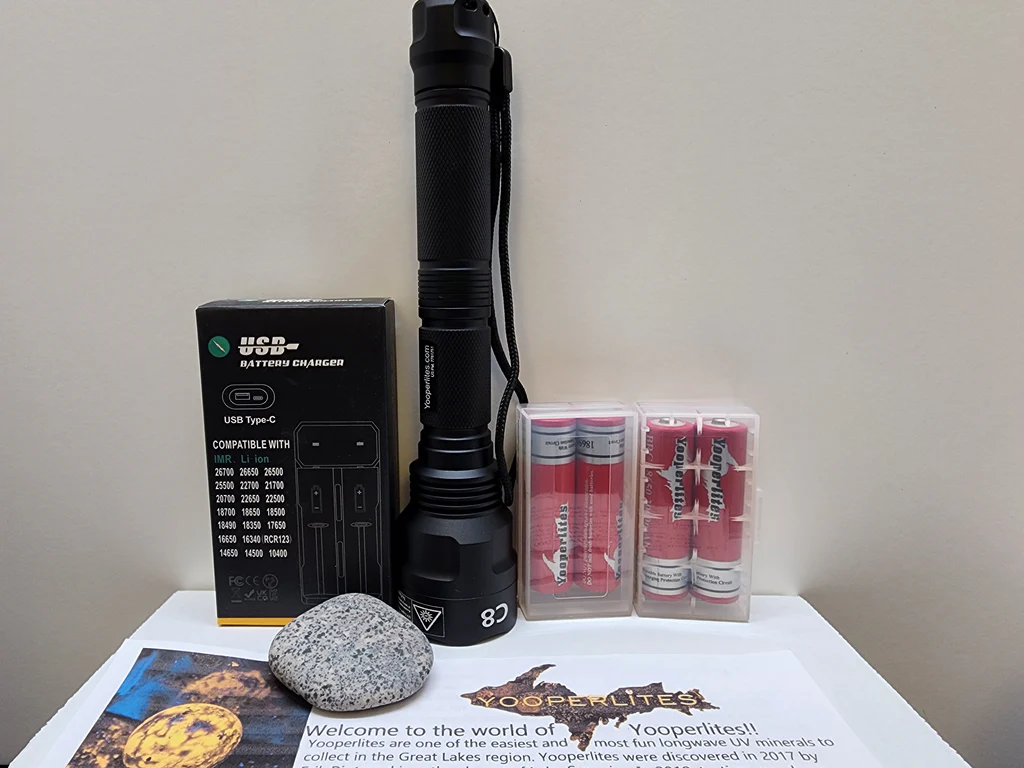
365nm UV Flashlight Guide,The Best 365nm UV Flashlight,Ever walked into a hotel room and wondered what secrets the carpet might be hiding? Or tried to figure out where exactly your dog had an accident on the rug? A 365nm UV flashlight answers both questions instantly and brutally honestly.Here’s the thing most people don’t realize: not every UV flashlight works the same way.
That cheap purple-glowing blacklight you bought online? It’s probably a 395nm light and it’s nowhere near as powerful or precise as a true 365nm UV light. The difference between these two numbers sounds small. In practice, it’s enormous.This guide covers everything what a 365nm UV flashlight actually does, why the wavelength matters, what to look for when buying one, and which models genuinely deliver. Whether you’re hunting scorpions in Arizona, checking for refrigerant leaks in your car, or just trying to find where the cat went at 2am this is the only guide you’ll need.
What Is a 365nm UV Flashlight : And Why Does the Wavelength Matter?
365nm UV Flashlight Guide,Light travels in waves. The distance between each wave the wavelength determines what kind of light it is and what it can do. Human eyes detect wavelengths roughly between 380nm and 700nm. Go shorter than that and you’re in ultraviolet territory light the eye can’t see but that has powerful effects on certain materials.
Ultraviolet light splits into three categories:
| UV Type | Wavelength Range | Common Application |
| UVA | 315 – 400nm | Blacklights, fluorescence detection, tanning |
| UVB | 280 – 315nm | Medical therapy, some sterilization |
| UVC | 100 – 280nm | Germicidal sterilization, water purification |
A 365nm UV flashlight sits firmly in the UVA range specifically at the lower end, where UV light becomes most effective at triggering fluorescence in organic compounds, minerals, and security inks. This is why professionals in forensics, geology, automotive repair, and art authentication all reach for 365nm as their standard tool.
Understanding Why 365nm Is the Sweet Spot
Think of UV wavelengths like keys and locks. Different fluorescent materials respond to different wavelengths and 365nm happens to unlock the widest range of them. Scorpion exoskeletons, pet urine proteins, UV-reactive security inks in banknotes, oil-based refrigerant dyes, certain gemstone compounds they all fluoresce most strongly under 365nm illumination.Go higher say 395nm or 405nm and you’re producing a light that still works but produces a lot of visible violet glow alongside the UV.
That visible light actually masks the fluorescence you’re trying to see. It’s like trying to spot a candle flame in bright sunlight. The signal is there you just can’t see it clearly because of all the noise around it.Go lower into UVC territory and you’ve left fluorescence detection behind entirely. UVC is germicidal. It destroys DNA. It’s dangerous without serious protective equipment and has completely different applications.365nm is the professional standard because it produces maximum fluorescence response with minimal visible light interference.That is the entire narrative condensed into a single statement.
365nm vs 395nm UV Flashlight — The Real Difference
365nm UV Flashlight Guide,This comparison trips up almost every first-time buyer. Both are marketed as “UV flashlights.” Both glow in a dark room. But they perform very differently in real applications.A 395nm UV flashlight emits light closer to the visible spectrum. You’ll see a strong purple/violet glow when you turn it on. It looks impressive. It feels powerful. But that visible light bleeds into your field of view and reduces contrast making faint fluorescent signals much harder to detect.A true 365nm UV flashlight with a quality filter produces almost no visible light.
Point it at a wall and the beam looks nearly invisible. Point it at a pet stain on the carpet and that stain lights up like a neon sign. The contrast is dramatically better because there’s no competing visible light washing out the fluorescence.
Here’s a simple side-by-side:
| Feature | 365nm UV Flashlight | 395nm UV Flashlight |
| Visible light output | Very low — near invisible beam | High — strong purple glow |
| Fluorescence contrast | Excellent — high contrast detection | Moderate — glow masks some signals |
| Pet stain detection | Outstanding | Decent |
| Mineral fluorescence | Professional grade | Hobbyist grade |
| Counterfeit detection | Bank/security standard | Basic level |
| Price range | Higher | Lower |
| Filter quality required | Critical | Less critical |
The bottom line? If you’re buying a UV flashlight for serious use not just making white T-shirts glow at a party a 365nm blacklight flashlight is the only choice worth making.
What Can You Actually Do With a 365nm UV Flashlight?
365nm UV Flashlight Guide,The applications are wider than most people expect. Once you own a quality 365nm UV torch, you’ll find yourself reaching for it constantly. Here are the most practical and fascinating uses.
Detecting Pet Urine and Stains
This is the use case that sends most people searching for a 365nm UV flashlight in the first place and for good reason. Pet urine contains proteins and phosphors that fluoresce brilliantly under 365nm UV light. Even after the stain has dried completely and disappeared from visible sight, the UV signature remains.Walk through any room in complete darkness with a quality 365nm UV light and stains that have been there for years show up as glowing patches yellow-green, bright, and unmistakable.
The 365nm wavelength is particularly effective here because urine phosphors respond most strongly to this specific wavelength range. A 395nm light will show some stains but misses many older or diluted ones.
Pro tips for pet stain detection:
- Turn off all lights even small amounts of ambient light reduce contrast significantly
- Move slowly across the floor in a systematic grid pattern
- Hold the flashlight about 12–18 inches from the surface
- Mark detected stains with painter’s tape before turning lights back on
- Check furniture, walls, and baseboards not just floors
Scorpion Hunting at Night
This one sounds like something out of a nature documentary but it’s a genuine practical concern for millions of people living in the American Southwest, Mexico, the Middle East, and parts of Africa and Asia. Scorpions are nearly invisible in normal light. Under a 365nm UV flashlight, they glow a brilliant blue-green. Brilliantly, vividly, unmistakably.The science behind it is fascinating. Scorpion exoskeletons contain compounds called beta-carbolines and 4-methylcoumarin that absorb UV light and re-emit it as visible fluorescence.
Researchers still debate the evolutionary reason for this — some suggest it helps scorpions detect UV levels in their environment, others think it’s a byproduct of cuticle hardening. Either way, it makes hunting them with a 365nm UV torch remarkably effective.“A 365nm UV flashlight is the single most effective tool for scorpion detection. Nothing else comes close.” Pest control professionals consistently report this across the industry.Walk your home’s perimeter at night with a quality 365nm blacklight flashlight and any scorpion within beam range will light up immediately. Check dark corners, under rocks, around door frames, and near water sources.
Counterfeit Currency and Document Detection
Every modern banknote from the US dollar to the Euro to the British pound contains security features that only reveal themselves under UV light. These include fluorescent threads woven into the paper, UV-reactive inks in specific patterns, and hidden watermarks that glow under ultraviolet illumination.A 365nm UV flashlight is the professional standard for this application.365nm UV Flashlight Guide
Banks, retailers, and border control agencies use 365nm lights because the low visible light output provides maximum contrast making security features immediately obvious and making fakes immediately obvious by their absence or incorrect fluorescence.
What to check on a US dollar bill under 365nm UV:
- The security thread glows pink for $100, yellow for $50, green for $20
- Fluorescent fibers scattered randomly through the paper glow red, blue, and green
- Some denomination numerals show UV-reactive ink
- Counterfeit bills typically either don’t glow at all or glow uniformly wrong
Leak Detection in HVAC and Automotive Systems
Mechanics and HVAC technicians have used UV dye leak detection for decades and the 365nm UV flashlight is their tool of choice. The process works by adding UV-fluorescent dye to a system refrigerant lines, engine oil, power steering fluid, coolant then scanning with UV light after the system runs. Even the smallest leak shows up as a glowing trace.
This method finds leaks that pressure testing misses particularly slow seeps that don’t produce enough pressure drop to register. For automotive shops, a high-power 365nm UV flashlight pays for itself the first time it finds a leak that would have cost hours of diagnostic time otherwise.
Common automotive fluids detectable with 365nm UV:
- Refrigerant (AC system leaks)
- Engine oil
- Power steering fluid
- Coolant/antifreeze
- Brake fluid
- Transmission fluid
Gemstone and Mineral Fluorescence
For rock collectors and geologists, a 365nm UV flashlight opens up a completely different world within their collections. Many minerals that look ordinary in daylight transform dramatically under UV glowing in vivid reds, greens, blues, oranges, and yellows.
| Mineral | Fluorescence Color Under 365nm |
| Fluorite | Blue, green, or purple |
| Calcite | Red, orange, or pink |
| Willemite | Brilliant green |
| Scheelite | Bright blue-white |
| Aragonite | White or yellow |
| Opal | Green or white |
| Autunite | Bright yellow-green |
The 365nm wavelength triggers stronger fluorescence responses in minerals than 395nm lights which is why serious collectors and museum curators specify 365nm as their standard. A weekend at a mineral show with a quality 365nm UV torch reveals stunning fluorescence that casual visitors with lesser lights simply never see.
Forensic and Crime Scene Investigation
Television has made everyone familiar with UV light’s role in forensic investigation and the reality is just as remarkable as the drama. Biological materials including certain bodily fluids fluoresce under UV light, making them detectable even after surfaces have been cleaned. 365nm UV flashlights are standard equipment in forensic kits because their low visible light output maximizes contrast on trace evidence.
Beyond crime scene work, hobbyists use 365nm UV lights for:
- Detecting insect activity and infestations
- Checking hotel rooms for cleanliness (the results are often humbling)
- Recognizing food impurities certain molds emit fluorescence when exposed to ultraviolet light.
- Antique authentication old materials often fluoresce differently than modern reproductions.
- 365nm UV Flashlight Guide
Art Authentication and Restoration
Art conservators and authentication experts rely heavily on 365nm UV flashlights and UV lamps during their work. Under UV light, old varnish on paintings fluoresces differently than new varnish making restorations, repairs, and overpainting immediately visible. Forged paintings often reveal themselves under UV because modern materials fluoresce differently than historic ones.This is not just a museum tool. Serious collectors use 365nm UV torches before purchasing artwork, antiques, ceramics, and jewelry. The UV examination takes seconds and can reveal decades of hidden repair work or outright forgery.
Key Features to Look for in a 365nm UV Flashlight
365nm UV Flashlight Guide,Buying a 365nm UV flashlight without knowing what to look for is how you end up with an expensive disappointment. Here’s what actually matters.
LED Quality and True 365nm Output
This is the most important factor and the most frequently misrepresented in product listings. Not every flashlight marketed as “365nm” actually emits true 365nm UV light. Many use cheaper LEDs that emit primarily at 370–380nm and call it close enough. It isn’t.
Look for these LED brands when choosing a 365nm UV flashlight:
- Nichia (Japanese industry gold standard)
- Seoul Semiconductor (Korean professional grade)
- LG UV LEDs (reliable, consistent output)
- 365nm UV Flashlight Guide
Avoid unnamed Chinese UV LEDs, they frequently emit at the wrong wavelength, degrade quickly, and often lack proper filtering. The LED quality determines everything else about the flashlight’s performance.
Power Output — Understanding mW
UV flashlights aren’t measured in lumens like regular flashlights they’re measured in milliwatts (mW) of UV output. More milliwatts means stronger fluorescence response and longer effective detection distance.
| mW Output | Use Case | Example Application |
| 100–500mW | Basic home use | Pet stain detection, casual scorpion hunting |
| 500mW–2W | Serious hobbyist | Mineral collecting, detailed forensic work |
| 2W–5W | Professional | Automotive leak detection, art authentication |
| 5W+ | Industrial/scientific | Large area scanning, research applications |
Filter Quality — The Feature Nobody Talks About
A bandpass filter is what separates a professional 365nm UV flashlight from a toy. Without a quality filter, UV LEDs leak significant visible light producing that purple glow that reduces fluorescence contrast. A good optical filter blocks visible wavelengths and transmits only UV light resulting in an almost-invisible beam that produces dramatically sharper fluorescence detection.365nm UV Flashlight Guide
How to test your filter quality:
- Take the flashlight into a completely dark room
- Point it at a white wall
- If you see strong purple or violet light the filter is poor
- A quality filtered 365nm UV flashlight should produce almost no visible illumination on a plain white wall
Battery Life and Power Source
Most serious 365nm UV flashlights use 18650 lithium-ion batteries the same format used in high-powered tactical flashlights and laptop batteries. These offer significantly more capacity than AA batteries and support the higher current draw that powerful UV LEDs require.365nm UV Flashlight Guide
18650 vs AA — quick comparison:
| Factor | 18650 Battery | AA Battery |
| Capacity | 2500–3500mAh typical | 2400–3000mAh typical |
| Rechargeability | Yes — hundreds of cycles | Disposable (unless NiMH) |
| Power delivery | Consistent high current | Drops as battery depletes |
| Availability | Online and specialty stores | Everywhere |
| Best for | High-power 365nm UV flashlights | Compact, lower-power models |
Build Quality and Durability
A 365nm UV flashlight built from aircraft-grade aluminum handles drops, field conditions, and repeated use without degrading. Plastic bodies flex and crack and more critically allow UV light to leak from the body itself, potentially affecting accuracy.365nm UV Flashlight Guide
Look for:
- IP65 rating or higher — protection against dust and water jets
- Aluminum alloy body — lightweight but impact resistant
- Knurled grip — prevents slipping in wet or cold conditions
- Recessed lens — protects the UV filter from accidental contact damage
Best 365nm UV Flashlights in 2025 — Honest Reviews
The market is flooded with options. Here are the categories that matter and what genuinely performs.
Best Overall 365nm UV Flashlight
The best overall option balances true 365nm output, quality LED, strong filter, and practical build quality. Look for models using Nichia UV LEDs with optical glass bandpass filters, 18650 battery compatibility, and output in the 1–3W range. These deliver professional-grade fluorescence detection for hobbyist to semi-professional use.365nm UV Flashlight
What to expect:
- Near-invisible beam confirming excellent filter quality
- Dramatically better pet stain and scorpion detection than 395nm competitors
- Runtime of 1.5–3 hours on a single 18650 charge
- Price range: $40–$80
Best Budget 365nm UV Flashlight
Budget 365nm UV flashlights exist — but be honest about the trade-offs. In this category, filter quality is usually the first casualty. You’ll see more visible purple light and slightly reduced fluorescence contrast. That said, even a budget 365nm light outperforms a 395nm light for most practical applications.
Honest expectations for budget models:
- Adequate for pet stain detection and basic scorpion hunting
- Filter quality varies — test immediately upon receipt
- LED longevity may be shorter than premium models
- Price range: $15–$35
Best High-Power 365nm UV Flashlight
Professionals need more output — more milliwatts, larger illumination area, longer detection distance. High-power 365nm UV torches in the 3–10W range cover large areas quickly and detect trace amounts of fluorescent material that lower-power lights miss.
Key specs to look for:
- Output: 3W+ UV power
- Battery: dual 18650 or dedicated high-capacity pack
- Beam: wide flood pattern for area scanning
- Filter: multi-layer optical bandpass
- Price range: $80–$200
Best Compact 365nm UV Flashlight
Not every situation calls for a full-size flashlight. Compact 365nm UV flashlights running on single AA or 14500 batteries fit in pockets and purses making them ideal for travel, hotel room checks, and everyday carry.
Trade-offs to accept:
- Lower mW output than full-size models
- Shorter runtime
- Smaller illumination area
- Still dramatically better than 395nm alternatives
Best 365nm UV Flashlight for Pet Owners
Pet owners need wide beam coverage a tight spot beam misses too much. The best 365nm UV flashlight for pet detection combines true 365nm output with a flood-style beam pattern that covers large floor areas efficiently. Ease of use matters here too comfortable grip, simple single-button operation, and good runtime.
How to Use a 365nm UV Flashlight Properly
Owning the right tool is step one. Using it correctly is step two.
Safety First — Is 365nm UV Light Dangerous?
Yes, with appropriate caveats. 365nm UVA light is not harmless. Extended direct exposure to eyes causes cumulative damage the same mechanism as UV exposure from sunlight, just more concentrated. Never look directly into a 365nm UV flashlight beam and never point it at another person’s face.
Essential safety practices:
- Consistently don UV-protective eyewear when engaged in prolonged activities.
- Keep beam away from eyes — yours and others’
- Limit continuous skin exposure — treat it like sun exposure
- Keep away from children who might look directly into the beam
- Store safely when not in use
Best Conditions for Maximum Performance
The single biggest mistake new 365nm UV flashlight owners make is using it in daylight or bright artificial light. Fluorescence detection depends on contrast and ambient light destroys that contrast.
Optimal conditions:
- Complete darkness whenever possible
- At minimum dim the room significantly
- Allow eyes to dark-adapt for 2–3 minutes before scanning
- Shield the beam area from outside light sources
- Indoor use generally outperforms outdoor use at night due to light pollution
Step-by-Step: Pet Stain Detection
- Remove all pets and people from the room
- Turn off every light source close curtains
- Allow 2 minutes for eyes to adjust to darkness
- Hold the 365nm UV flashlight 12–18 inches above the floor
- Move slowly in parallel strips across the entire floor
- Mark glowing areas with painter’s tape without turning on lights
- Turn lights on clean marked areas with enzymatic cleaner
Common Mistakes People Make With 365nm UV Flashlights
Even after buying the right flashlight, these errors reduce performance significantly.
- Buying 395nm thinking it equals 365nm — the most common and costly mistake
- Using it in lit rooms — fluorescence disappears in ambient light
- Skipping eye protection — UV damage is cumulative and irreversible
- Choosing poor filter quality — the purple glow is a performance killer
- Expecting germicidal properties — 365nm UVA does not kill bacteria or viruses. That requires UVC at 254nm. This is a dangerous misconception.
- Not dark-adapting eyes — rushing into a scan before eyes adjust to darkness
- Holding the light too far from surfaces — UV intensity drops with distance rapidly
Frequently Asked Questions About 365nm UV Flashlights
Is a 365nm UV flashlight safe to use indoors?
Yes, with sensible precautions. Wear UV-blocking glasses during extended sessions and avoid prolonged direct skin exposure. Brief indoor use for pet stain detection or scorpion checking poses minimal risk to healthy adults.
Can a 365nm UV flashlight kill bacteria or viruses?
No. This is one of the most dangerous misconceptions about UV flashlights. Germicidal UV operates at 254nm (UVC) a completely different wavelength requiring specialized equipment. A 365nm UV flashlight has zero germicidal effect. Do not use it as a disinfection tool.
Why does my 365nm UV flashlight look purple?
It means the filter quality is poor. A properly filtered 365nm UV torch produces almost no visible light. Visible purple output indicates the filter is allowing visible wavelengths through which reduces fluorescence contrast and detection effectiveness.
How far does a 365nm UV flashlight reach?
Effective detection range depends on mW output and ambient light conditions. In complete darkness, a quality 3W 365nm UV flashlight detects strong fluorescent materials at 10–15 feet. For practical surface scanning pet stains, scorpions, leaks working distances of 6–24 inches deliver the best results.
Can I use a 365nm UV flashlight on my skin?
Brief exposure is not immediately harmful but isn’t recommended as a habit. Cumulative UVA exposure contributes to skin aging and DNA damage — the same mechanism as sun tanning. Don’t use it to inspect your own skin repeatedly or at close range.
Final Verdict — Is a 365nm UV Flashlight Worth It?
Certainly provided you choose the appropriate one.The gap between a quality 365nm UV flashlight and a cheap 395nm alternative isn’t a matter of preference. It’s a matter of whether the tool actually works for serious applications. Pet stain detection, scorpion hunting, professional leak detection, mineral collecting, art authentication all of these benefit dramatically from true 365nm output with quality filtering.
Buy a 365nm UV flashlight if you:
- Need to find hidden pet stains accurately
- Live in scorpion territory
- Work in automotive, HVAC, or forensic fields
- Collect minerals or authenticate artwork or antiques
- Want a tool that performs rather than just glows purple
You probably don’t need one if you:
- Just want blacklight effects for parties or posters (395nm is fine for that)
- Have no specific detection application in mind
- Aren’t willing to invest in a model with quality LED and filter
Spend the extra money on a Nichia LED model with a proper bandpass filter and 18650 battery compatibility. The difference in performance justifies every rupee or dollar of the price gap. A quality 365nm UV flashlight lasts years, performs consistently, and does things that cheaper alternatives simply cannot.
That’s not marketing. That’s just physics.