

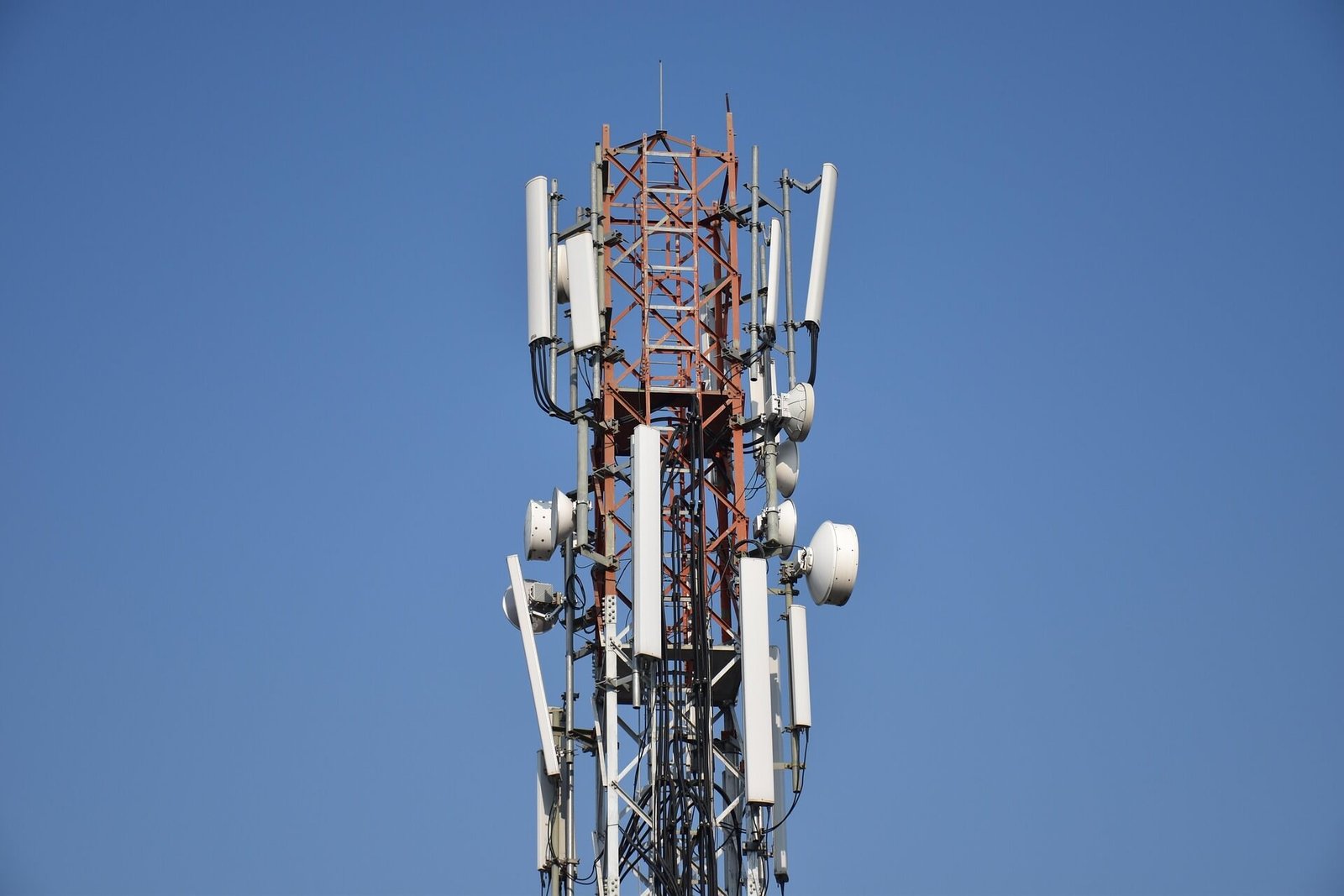
A quiet, master-planned city in South Florida isn’t exactly where you’d expect a high-stakes legal battle between a telecom giant and a local government to unfold. But that’s precisely what’s happening in Weston. The T-Mobile Weston cell tower dispute has become one of the most closely watched telecom conflicts in Florida pitting a community that fiercely guards its aesthetic identity against a wireless carrier armed with federal law and an aggressive 5G expansion agenda.
This isn’t just a local zoning squabble. It touches on federal telecom law, property rights, community autonomy and the unstoppable march of wireless infrastructure across American neighborhoods. Whether you’re a Weston resident directly affected, a property owner nearby or simply someone curious about how these disputes unfold, this guide covers every angle of the T-Mobile Weston tower conflict in detail.
What Is the T-Mobile Weston Cell Tower Dispute?
The T-Mobile Weston cell tower dispute centers on T-Mobile’s efforts to install a wireless telecommunications tower within the city limits of Weston, Florida — a planned community in Broward County known for its manicured neighborhoods, strict aesthetic standards and unusually high quality of life rankings among Florida cities.
Weston isn’t your typical sprawling Florida suburb. The city incorporated in 1996 and was built from the ground up with deliberate planning — uniform architectural standards, lush landscaping requirements and strict controls over what gets built where and how it looks. Residents chose Weston specifically because of these standards and they’ve defended them aggressively over the years against developers and now against one of America’s largest wireless carriers.
T-Mobile filed applications with the city seeking approval to construct a cell tower at a specific location within Weston’s boundaries. The city pushed back citing aesthetic concerns, zoning regulations and community opposition. T-Mobile responded by invoking federal telecommunications law arguing that local governments have limited authority to block tower installations when a carrier demonstrates a genuine coverage need. That argument is where the legal conflict truly begins.
Key parties in the dispute:
- T-Mobile US — the applicant seeking tower construction approval
- City of Weston — the local government authority reviewing and opposing the application
- Weston City Council — the elected body making zoning and land use decisions
- Weston residents and homeowner associations — the community voice driving opposition
- Federal courts — the likely arbiter if the dispute escalates beyond local proceedings
The dispute reflects a tension that plays out in cities across America every year — the collision between a community’s right to control its own appearance and a telecommunications company’s federally supported right to build the infrastructure needed to serve its customers.
Why Does T-Mobile Want to Build a Cell Tower in Weston?

T-Mobile’s motivations in the Weston dispute aren’t mysterious. They’re driven by the same forces pushing every major carrier to expand infrastructure aggressively throughout suburban America network demand, 5G rollout timelines and competitive pressure.
Coverage Gaps in the Weston Area
T-Mobile maintains that specific areas within Weston experience inadequate wireless coverage dropped calls, slow data speeds and unreliable connections in areas where residents and businesses depend on consistent service. In federal telecom law this claim of a “significant gap” in coverage is critically important. Carriers that can demonstrate a genuine coverage gap gain significant legal leverage in tower placement disputes because local governments cannot deny tower applications simply on aesthetic grounds when a real coverage need exists.
Weston’s geography contributes to coverage challenges. The city’s vast network of trees — regarded as one of its most valued visual characteristics — captures and diffuses wireless communications. Dense vegetation, while beautiful, creates natural barriers to signal propagation that require additional infrastructure to overcome. T-Mobile’s engineers have almost certainly mapped these coverage gaps in detail as part of building their legal case.
5G Network Expansion Strategy
Beyond plugging existing coverage holes T-Mobile has broader strategic motivations. The carrier has positioned itself as America’s 5G leader and its expansion requires dense networks of towers and small cells throughout suburban markets. Weston with its affluent, tech-savvy population — represents exactly the kind of high-value market T-Mobile wants to serve with premium 5G connectivity.
T-Mobile’s Un-carrier strategy has always emphasized aggressive network expansion as a competitive differentiator. Losing a tower application in Weston isn’t just a local setback it sets a precedent that other communities might use to resist T-Mobile’s infrastructure plans. That makes fighting the Weston dispute worth significant legal resources from T-Mobile’s perspective even if the individual tower seems small in the context of a nationwide network.
The Business Case for This Specific Location
Carriers don’t select tower locations randomly. Radio frequency engineers conduct detailed propagation modeling to identify the precise locations where new infrastructure delivers maximum network improvement. When T-Mobile selected its proposed Weston site the location almost certainly emerged from rigorous technical analysis showing it as the optimal point for addressing identified coverage deficiencies. Substituting an alternative location — even one the community finds more acceptable may not deliver the same network benefit which is why carriers resist compromise locations so tenaciously.
Why Is Weston Pushing Back Against the T-Mobile Cell Tower?
Weston’s resistance to the T-Mobile tower isn’t simply reflexive NIMBYism though that element certainly exists. The city has substantive concerns rooted in its founding principles and the explicit promises made to residents when they chose to live there.
Visual Impact and Aesthetic Concerns
Weston built its identity on visual consistency. Architectural review boards govern everything from house paint colors to fence heights. A cell tower even a disguised one dressed up as a pine tree or flagpole represents a jarring intrusion into that carefully maintained visual environment. Residents argue that no amount of camouflage makes a 100-foot steel structure invisible and that the tower fundamentally violates the aesthetic covenant Weston made with its residents decades ago.The aesthetic argument has legal limits however. Federal law explicitly prohibits local governments from denying tower applications based solely on aesthetic concerns when a legitimate coverage need exists. Weston’s lawyers know this which is why the city’s opposition strategy likely focuses on procedural grounds, alternative site proposals and challenging T-Mobile’s coverage gap claims rather than simply arguing the tower looks bad.
Property Value Concerns
Property value impact is one of the most emotionally charged aspects of any cell tower dispute. Weston homeowners near the proposed tower site worry about reduced property values a concern that’s both understandable and legally complicated. Federal law specifically prohibits courts from considering property value impacts when evaluating cell tower disputes so this argument carries weight in the court of public opinion but limited weight in an actual courtroom.
Research on cell towers and property values is genuinely mixed. Some studies show modest negative impacts on properties immediately adjacent to towers. Others find no statistically significant effect. The perception of impact whether real or imagined drives community opposition regardless of what the data shows.
Health and Safety Concerns
Opposition groups in Weston have raised concerns about radiofrequency electromagnetic field exposure from cell towers — a persistent concern in communities across America whenever new wireless infrastructure is proposed. These concerns are emotionally powerful and politically significant even though the scientific consensus and federal regulatory framework hold that properly sited cell towers operating within FCC emission limits pose no demonstrated health risk.
Critically federal law prohibits local governments from denying tower applications based on health concerns related to RF emissions as long as the tower complies with FCC standards. Weston cannot legally block T-Mobile’s tower by citing health fears. But those fears shape public pressure on city officials and influence how aggressively the council pursues opposition.
Zoning and Land Use Regulations
This is where Weston’s legal resistance has its strongest footing. Cities retain genuine if limited authority to regulate where cell towers go based on legitimate zoning and land use considerations. Weston can argue that the proposed location violates specific zoning ordinances, doesn’t meet setback requirements, conflicts with land use designations or hasn’t followed proper application procedures. These procedural and zoning arguments give the city legitimate grounds to delay and challenge the application without running directly into the federal preemption wall.
The Legal Battle — T-Mobile vs Weston City Officials
The legal dimension of the T-Mobile Weston cell tower dispute is where the conflict gets genuinely complex and where the outcome will ultimately be determined.
Federal Telecom Law and Local Authority
The central legal tension in the Weston dispute and virtually every similar conflict across America flows from the Telecommunications Act of 1996. This federal law created a framework that simultaneously preserved some local zoning authority over cell towers while significantly curtailing it. The Act’s key provisions relevant to the Weston dispute include:
- Local governments cannot prohibit or have the effect of prohibiting wireless service provision
- Local governments cannot deny applications based on RF emission health concerns if FCC standards are met
- Local governments cannot unreasonably discriminate among providers of equivalent services
- Local governments must act on applications within a reasonable timeframe
- Denials must be in writing and supported by substantial evidence in a written record
These provisions give T-Mobile powerful legal tools. If Weston denies the tower application T-Mobile can challenge that denial in federal court arguing it violates the Telecommunications Act. The burden then falls on Weston to demonstrate its denial was supported by substantial evidence and didn’t effectively prohibit wireless service.
Timeline of Key Legal Developments
| Date | Development |
| Application filed | T-Mobile submits tower application to Weston |
| Initial review period | City planning department reviews application |
| Public hearing | City council holds public hearing on application |
| Council vote | Weston council votes on application approval or denial |
| Legal challenge | T-Mobile files federal lawsuit if denied |
| Federal proceedings | Court reviews denial against Telecom Act standards |
| Resolution | Court rules or parties reach settlement |
Arguments from Both Sides
T-Mobile’s legal team will argue that Weston’s denial if it comes effectively prohibits wireless service in a demonstrable coverage gap area and therefore violates the Telecommunications Act. They’ll present RF propagation studies showing the coverage deficiency and engineering analysis demonstrating why the specific proposed location is necessary to address it.
Weston’s legal team will counter that the city followed proper procedures, based its decision on substantial evidence in the written record and that alternative locations exist that could address coverage needs without violating legitimate zoning standards. The city will also scrutinize T-Mobile’s coverage gap evidence challenging the methodology, the threshold used to define a “significant gap” and whether alternative technologies could address the claimed deficiency.
What Federal Law Says About Cell Tower Disputes Like Weston
Understanding the federal legal framework helps explain why cities like Weston so often lose these battles even when community opposition runs deep.
The Telecommunications Act of 1996 — The Key Law
Congress passed the Telecommunications Act with the explicit goal of accelerating wireless infrastructure deployment across America. Lawmakers recognized that local opposition however well-intentioned could collectively impede the development of a national wireless network if left entirely unchecked. The Act struck a compromise: local governments keep some zoning authority but lose the ability to effectively block wireless service through that authority.
The Act’s Section 332(c)(7) is the specific provision most relevant to disputes like Weston. It creates what lawyers call “substantial evidence” review federal courts examine whether a local government’s denial is supported by substantial evidence in a written record. This is a meaningful legal standard but it’s not impossibly high. Cities that carefully document their reasoning can sometimes successfully defend denials.
FCC Rules and Shot Clock Deadlines
The FCC has implemented rules requiring local governments to act on cell tower applications within specific timeframes typically 150 days for new tower applications. Missing these deadlines gives carriers additional legal ammunition. If Weston’s review process drags on beyond the shot clock period T-Mobile can file suit based on the delay alone regardless of the ultimate outcome of the application.
How Courts Have Ruled in Similar Cases Nationally
The track record in T-Mobile vs local government disputes nationally strongly favors the carrier. Federal courts have repeatedly found that cities violated the Telecommunications Act by denying tower applications based on:
- Aesthetic concerns alone
- Property value impacts
- Health and safety fears related to RF emissions
- Community opposition without substantial technical evidence supporting denial
Cities win these cases most often when they can demonstrate procedural compliance, a genuinely available alternative location and substantial technical evidence challenging the carrier’s coverage gap claims.
Community Response to the T-Mobile Weston Cell Tower Conflict
The community response to the T-Mobile Weston tower dispute has been vigorous — reflecting the deep attachment Weston residents feel toward their city’s character and their distrust of large corporate entities overriding local preferences.
Resident Petitions and Community Organizing
Neighbors near the proposed tower site organized quickly after T-Mobile’s application became public. Petition drives collected hundreds of signatures opposing the installation. Neighborhood WhatsApp groups and NextDoor communities became organizing hubs where residents shared information, coordinated attendance at public meetings and developed talking points for addressing the city council.
This kind of grassroots organizing is a consistent feature of cell tower disputes nationwide. It rarely changes the legal outcome — federal law doesn’t care how many people sign a petition — but it creates political pressure on elected officials and ensures the dispute receives media attention that might otherwise be absent.
City Council’s Public Position
Weston’s city council has publicly aligned with community concerns a predictable political response given that council members answer to the residents who elected them. Council members have expressed skepticism about T-Mobile’s coverage gap claims and support for exploring alternative locations that would cause less community disruption.
Whether that public posture translates into a formal denial and the expensive federal litigation that would likely follow is the critical question the council must ultimately answer. Local officials in similar disputes often find themselves caught between genuine community sympathy and the cold calculus of legal risk. Fighting T-Mobile in federal court costs money the city could spend on services residents actually want.
Media Coverage and Public Awareness
Local South Florida media has covered the Weston dispute with the intensity that community conflicts of this nature typically generate. Coverage in outlets serving Broward County has kept the issue visible and given opponents a platform to articulate their concerns publicly. That coverage also creates a record that both sides can reference in subsequent legal proceedings.
Similar Cell Tower Disputes Across the United States
The T-Mobile Weston cell tower dispute isn’t unique. Versions of this conflict play out in communities across America every year. Looking at how comparable disputes resolved reveals important lessons for Weston.
Case Study 1 — T-Mobile vs City of Roswell, Georgia
The City of Roswell, Georgia denied T-Mobile’s application to construct a tower disguised as a tree citing aesthetic and community character concerns. T-Mobile sued in federal court. The case reached the Supreme Court in 2015 — T-Mobile South LLC v. City of Roswell — where the Court ruled that local governments must provide written reasons for denying tower applications even if those reasons appear elsewhere in the public record. Roswell ultimately lost the broader dispute demonstrating that even Supreme Court-level litigation doesn’t guarantee community victory.
Case Study 2 — Residents vs AT&T in Marin County, California
Marin County California — an area with demographics and aesthetic sensibilities similar to Weston — fought AT&T over tower placements for years. Despite intense community opposition and sophisticated legal resistance most tower applications eventually succeeded. The county ultimately developed a more collaborative process with carriers to identify locations that minimized community impact while satisfying coverage requirements — a pragmatic compromise that avoided endless litigation.
Case Study 3 — Small Cells in Montgomery County, Maryland
Montgomery County Maryland attempted to use local authority to restrict small cell deployments on public rights-of-way. Federal courts consistently sided with carriers finding that counties could regulate aesthetics and placement details but couldn’t effectively prohibit deployment. The county eventually developed design standards that gave them some aesthetic control while allowing the infrastructure to proceed.
What These Cases Tell Weston
| Outcome | Communities That Achieved It | How They Did It |
| Full tower block | Very rare | Almost never succeeds long-term |
| Alternative location negotiated | Moderate frequency | Collaborative process with carrier |
| Design standards imposed | Common | Aesthetic requirements within legal limits |
| Litigation loss | Most common outcome | Carrier wins on Telecom Act grounds |
The lesson from national precedent is sobering for Weston opponents — outright victory is rare. The more achievable goal is negotiating design standards, alternative locations or aesthetic treatments that minimize impact while allowing the infrastructure to proceed.
What Happens If T-Mobile Wins the Weston Dispute?
A T-Mobile victory in the Weston cell tower dispute — whether through council approval or a successful federal court challenge sets a specific sequence of events in motion.
Tower Construction and Appearance
T-Mobile would proceed with construction at the approved location. Modern cell towers in residential and suburban environments typically use stealth designs, structures disguised as pine trees, flagpoles, light poles or architectural elements that blend more naturally into their surroundings than traditional lattice towers. The specific design would depend on local requirements T-Mobile agrees to as part of the approval process.
Construction timelines vary but a straightforward tower installation typically takes two to four months from permit issuance to operational status. During that period neighbors near the site experience construction activity vehicles, equipment and noise before the tower becomes a permanent but largely passive presence.
Network Improvements in Weston
Once operational the tower delivers the coverage improvements T-Mobile claims justify its installation. Residents in previously underserved areas gain access to stronger signals, faster data speeds and more reliable connections. For many Weston residents who’ve experienced coverage problems this is genuinely welcome even if they’d have preferred the improvement came without a visible tower.
Precedent for Future Applications
A T-Mobile win also sets precedent for future wireless infrastructure applications in Weston. Other carriers watching the outcome may feel emboldened to file their own applications knowing the city’s resistance has limits. Weston could face multiple tower disputes in coming years as 5G densification requires more infrastructure across the entire city.
What Happens If Weston Wins the Cell Tower Fight?
A Weston victory a successful denial that survives federal court review would be genuinely unusual and would represent a meaningful legal achievement for the city.
T-Mobile’s Likely Next Steps
Even a courtroom loss doesn’t end T-Mobile’s pursuit of Weston coverage. The carrier would almost certainly reapply with a modified proposal different location, different tower design, different technical justification that addresses the specific grounds on which its original application failed. Carriers treat individual application denials as obstacles to navigate rather than permanent defeats.
T-Mobile might also pursue small cell installations on utility poles and street lights throughout Weston a different regulatory pathway that cities have even less authority to block. Small cells provide coverage improvements through multiple low-profile installations rather than a single large tower which could actually result in more visible infrastructure than the original tower proposal.
Alternative Tower Placement Options
A Weston victory creates an opportunity for negotiation. With leverage established the city could engage T-Mobile in good faith discussions about alternative locations perhaps on industrial or commercial property away from residential areas, on existing tall structures like water towers or within less visually sensitive zones. These negotiations sometimes produce outcomes both sides can live with even when the initial dispute seemed irresolvable.
Conclusion
The T-Mobile Weston cell tower dispute crystallizes a conflict that American communities will navigate with increasing frequency as wireless carriers expand 5G infrastructure into every corner of the country. On one side stands a community with legitimate aesthetic values, genuine property concerns and a proud history of controlling its own character. On the other stands a carrier with federal law, technical evidence and the financial resources to pursue litigation until it gets what it needs.
National precedent suggests T-Mobile holds the stronger legal hand. The Telecommunications Act of 1996 was designed precisely to prevent local opposition however sincere from blocking wireless infrastructure deployment.